미국 변호사와 이민 전문가들이 전하는 심층 분석 리포트입니다.
NIW 신청자들이 자주 오해하는 부분
NIW 상담을 하다 보면 예상보다 자주 듣게 되는 말이 있습니다.
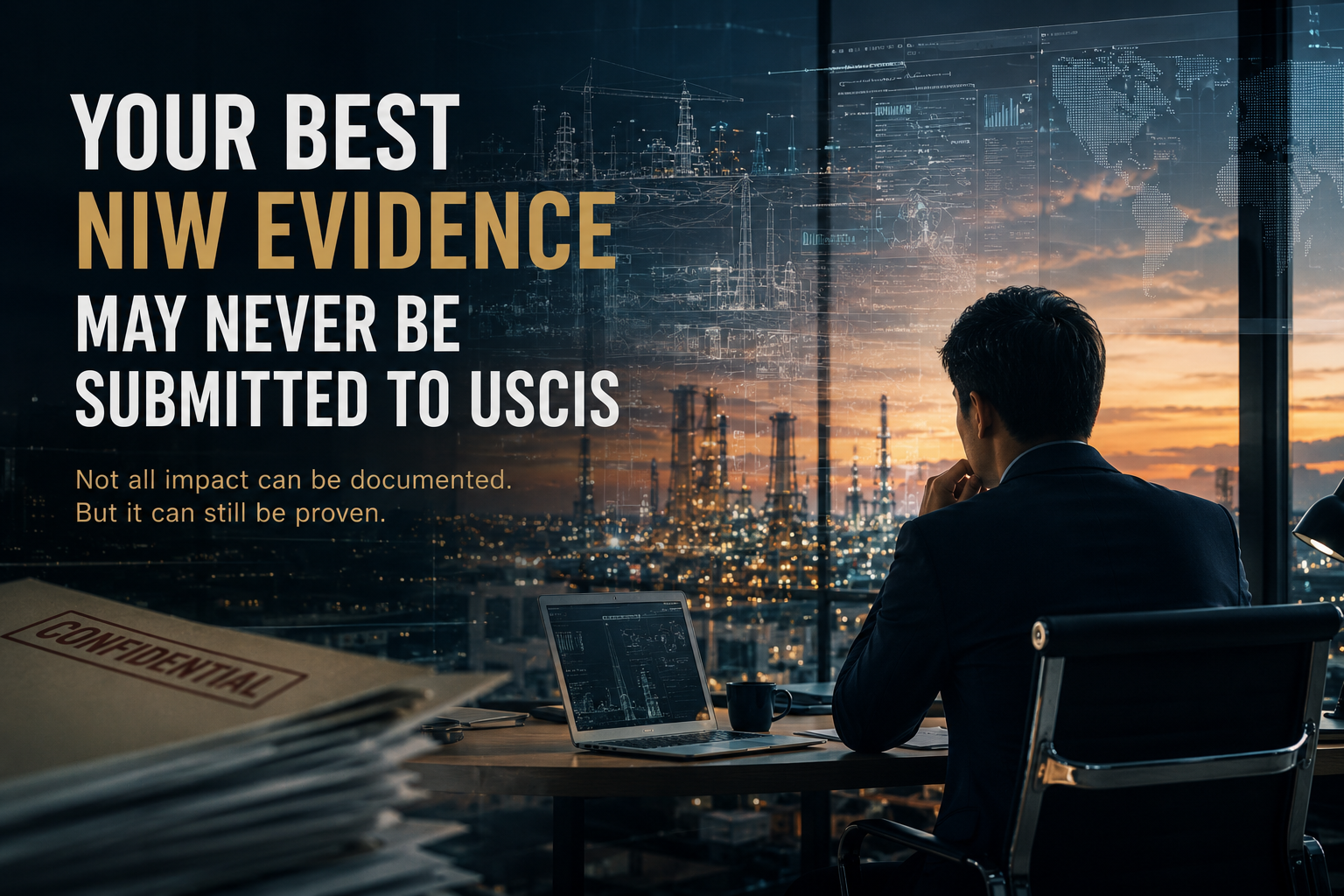
“중요한 프로젝트를 수행한 것은 맞는데, 그 내용을 외부에 공개할 수 없습니다.”
어떤 분은 대형 인프라 프로젝트에 참여한 엔지니어이고, 어떤 분은 반도체 제조, 인공지능, 금융 분석, 국방, 제약, 에너지 산업 등에서 일하고 있습니다. 그리고 상당수의 경우, 본인의 커리어에서 가장 중요한 성과가 기밀유지계약(NDA), 사내 보안 규정, 영업비밀 보호, 또는 정부 규제로 인해 외부에 공개할 수 없는 영역에 존재합니다.
이 때문에 많은 분들이 자신의 NIW 청원에 심각한 문제가 있다고 생각합니다.
“가장 중요한 성과를 제출할 수 없다면 USCIS가 제 업무의 가치를 어떻게 이해할 수 있을까요?”
충분히 이해할 수 있는 걱정입니다. 하지만 실제로는 생각보다 다른 방식으로 접근해야 하는 경우가 많습니다.
■ 실제 전문직 업무는 생각보다 단순하지 않다
많은 사람들이 NIW 증빙 준비를 단순하게 생각합니다.
프로젝트가 있으면 프로젝트 자료를 제출하고, 보고서를 작성했다면 보고서를 첨부하고, 회사 내부 분석 자료가 있다면 그것을 증거로 내면 된다고 생각합니다.
하지만 실제 전문직 환경은 그렇게 단순하게 작동하지 않습니다.
발전소 건설 프로젝트에 참여한 엔지니어는 내부 성능 분석 자료와 시운전 보고서를 볼 수 있을 수 있습니다. 금융 분석가는 대형 금융기관을 위한 정교한 리스크 모델을 개발했을 수 있습니다. 반도체 엔지니어는 수년간의 연구개발과 막대한 투자가 투입된 제조 공정 개선에 기여했을 수 있습니다.
문제는 이러한 자료가 존재하지 않는 것이 아닙니다.
문제는 그 자료의 소유권이 본인에게 있지 않다는 것입니다.
실제로 많은 전문직 종사자들은 충분한 증거를 가지고 있습니다. 다만 그 자료를 USCIS에 제출할 권한이 없는 경우가 많습니다.
■ 중요한 프로젝트일수록 오히려 공개가 어려운 경우가 많다
흥미롭게도 프로젝트의 중요성이 높아질수록 관련 정보에 대한 접근과 공개가 더욱 엄격하게 제한되는 경우가 많습니다.
대형 인프라 사업은 기밀 프로젝트 문서를 포함하고 있고, 기술 기업들은 독자적인 기술과 지식재산권을 보호합니다. 금융기관은 내부 모델과 고객 데이터를 철저히 관리하며, 제조업체들은 생산 공정과 운영 노하우를 외부에 공개하지 않습니다.
그 결과, 오히려 강력한 NIW 후보자들이 자신의 케이스를 약하게 평가하는 경우가 있습니다.
본인을 가장 가치 있게 만드는 프로젝트를 공개할 수 없기 때문입니다.
이 과정에서 많은 신청자들이 비슷한 오해를 하게 됩니다.
“보고서도 제출할 수 없고, 소스코드도 제출할 수 없고, 설계도면도 제출할 수 없고, 내부 분석 자료도 제출할 수 없다면 제 성과를 증명할 방법이 없는 것 아닌가요?”
하지만 실제 상황은 그보다 훨씬 복합적입니다.
■ ‘증거’와 ‘제출 가능한 증거’는 다르다
많은 NIW 케이스에서 중요한 개념 중 하나는 ‘증거(Evidence)’와 ‘제출 가능한 증거(Usable Evidence)’를 구분하는 것입니다.
신청자는 자신의 기여를 입증하는 다양한 자료를 보유하고 있을 수 있습니다.
그러나 모든 자료가 USCIS에 제출 가능한 것은 아닙니다.
사내 보고서에는 영업비밀이 포함될 수 있습니다. 시장 분석 자료에는 기업의 전략 정보가 담겨 있을 수 있습니다. 엔지니어링 문서에는 보호 대상 기술 정보가 포함될 수 있으며, 고객 자료는 개인정보 보호 의무의 적용을 받을 수 있습니다.
결국 중요한 것은 단순히 증거가 존재하는지가 아니라, 실제로 제출 가능한 형태의 증거를 찾는 것입니다.
많은 성공적인 NIW 청원은 바로 이 지점에서 일반적인 예상과는 다른 방식으로 구성됩니다.
■ 중요한 업무는 흔적을 남긴다
프로젝트 자체는 기밀이라 제출할 수 없더라도, 중요한 업무는 대부분 다양한 형태의 흔적(Footprint)을 남깁니다.
대형 프로젝트는 보도자료나 언론 기사로 소개될 수 있습니다. 업계 수상 실적이나 전문기관의 인정으로 이어질 수 있습니다. 학회 발표, 특허, 논문, 또는 전문 분야 내에서의 공식적인 평가로 연결되기도 합니다.
또한 상사나 업계 전문가가 확인서 또는 추천서를 통해 신청자의 역할을 설명할 수 있습니다. 공개된 자료를 통해 프로젝트 자체의 중요성을 입증할 수도 있습니다. 특정 직책이나 책임 범위를 통해 조직이 신청자에게 부여한 신뢰 수준을 보여줄 수도 있습니다.
개별 증거만 보면 전체 이야기를 설명하기에 부족할 수 있습니다.
그러나 이러한 증거들이 함께 모이면 USCIS는 다음과 같은 부분을 충분히 이해할 수 있게 됩니다.
- 무엇을 수행했는지
- 왜 중요한 업무였는지
- 그 과정에서 신청자가 어떤 역할을 했는지
많은 경우 NIW의 목적은 기밀 프로젝트의 모든 기술적 세부사항을 재현하는 것이 아닙니다.
오히려 신청자의 역할과 영향력을 신뢰할 수 있는 방식으로 설명하는 객관적이고 설득력 있는 스토리를 구축하는 데 있습니다.
■ 이것이 NIW 신청자들에게 중요한 이유
실무적으로 보면 뛰어난 경력을 가진 전문가일수록 자신의 케이스를 과소평가하는 경우가 많습니다.
그들은 제출할 수 없는 자료에 집중합니다.
회사 컴퓨터 안에 있는 자료들을 보며 “가장 좋은 증거를 제출할 수 없으니 내 케이스는 약하다”고 생각합니다.
하지만 USCIS는 단 하나의 문서만 보고 판단하지 않습니다.
USCIS는 제출된 모든 증거가 함께 만들어내는 전체적인 그림을 평가합니다.
추천서, 경력 성과, 프로젝트 설명, 업계 평가, 논문, 학회 발표, 수상 실적, 특허, 조직 내 역할, 그리고 제3자의 객관적 검증은 모두 그 그림의 일부가 될 수 있습니다.
때로는 하나의 결정적인 문서보다, 동일한 결론을 가리키는 여러 개의 독립적인 증거가 더 강력한 설득력을 갖기도 합니다.
■ 강력한 후보자들에게서 자주 나타나는 고민
이 문제는 특히 실무 영향력이 큰 전문가들에게서 자주 나타납니다.
본인의 업무가 중요하다는 것은 누구보다 잘 알고 있습니다. 다만 그 가치를 가장 직접적으로 보여주는 자료를 USCIS에 제출할 수 없는 상황인 것입니다.
다행히 그것이 곧 증거가 없다는 의미는 아닙니다.
중요한 것은 업무 자체만 보는 것이 아니라, 그 업무 주변에 존재하는 다양한 증거를 찾아내고 이를 통해 신청자의 기여를 정확하고 신뢰성 있게 설명하는 것입니다.
많은 전문가들에게 이 차이는 매우 중요합니다.
처음에는 “제출할 증거가 전혀 없다”고 생각했던 분들이, 실제로는 자신이 생각했던 것보다 훨씬 많은 증빙자료를 보유하고 있다는 사실을 발견하게 되는 경우가 적지 않기 때문입니다.
-------------------------------
Why Your Best NIW Evidence May Never Be Submitted to USCIS
One of the most understandable concerns I hear from prospective NIW applicants
sounds something like this:
"I worked on an important project, but I can't show it to anyone."
Sometimes the person is an engineer involved in a major infrastructure project. Sometimes they work in semiconductor manufacturing, artificial intelligence, financial analytics, defense, pharmaceuticals, or energy production. In many cases, the most significant work of their career exists behind confidentiality agreements, internal company policies, trade secret protections, or government restrictions.
They often assume this creates a serious problem for their NIW petition. After all, if the most important evidence cannot be submitted, how can USCIS understand the value of the work?
■ The Reality of Modern Professional Work
Many people imagine that evidence gathering for an NIW petition is a simple process. If a project exists, the applicant submits the project documents. If a report was written, the report is attached. If a company generated internal analyses, those analyses become evidence.
In reality, professional work does not always operate that way. An engineer working on a power generation facility may have access to internal commissioning reports, technical analyses, and project performance data. A financial analyst may have developed sophisticated risk models for a major institution. A semiconductor engineer may have contributed to proprietary manufacturing processes that represent years of research and investment. The problem is not that the evidence does not exist. The problem is that the evidence often belongs to someone else. Many professionals have plenty of evidence. They simply do not have permission to submit it.
■ Why Important Work Is Often Difficult to Document
Interestingly, the more significant a project becomes, the more likely it is that access to information becomes restricted.
Large infrastructure projects involve confidential project documentation. Technology companies protect proprietary systems and intellectual property. Financial institutions safeguard internal models and customer data. Manufacturers closely guard production methods and operational processes.
As a result, some of the strongest NIW candidates initially believe they have weak cases because they cannot disclose the very work that makes them valuable. This creates a misconception that is surprisingly common.
Applicants sometimes assume that if they cannot submit the report, the model, the source code, the design drawings, or the internal analysis, then they have no way to prove what they accomplished. In reality, the situation is usually much more nuanced.
■ The Difference Between Evidence and Usable Evidence
One of the most important concepts in many NIW cases is the distinction between evidence and usable evidence.
An applicant may possess extensive documentation of their contributions. However, not every document is appropriate for submission to USCIS.
Internal reports may contain proprietary information. Market analyses may contain confidential business strategies. Engineering documents may contain protected technical information. Client materials may be subject to privacy obligations.
The challenge is finding evidence that can actually be used. This is where many successful NIW petitions are built differently than people expect.
■ The Footprint Left Behind
Although confidential projects themselves may not be available for submission, important work often leaves a footprint.
A major project may generate public announcements, industry recognition, awards, media coverage, conference presentations, patents, publications, or professional acknowledgements.
Supervisors and industry experts may be able to confirm an applicant's role through verification letters. Public information may establish the significance of a project. Professional achievements may demonstrate the trust and responsibility given to the applicant.
Each piece of evidence may only tell part of the story. Taken together, however, these pieces can help USCIS understand what was accomplished, why it mattered, and how the applicant contributed.
In many cases, the objective is not to recreate every technical detail of a confidential project. The objective is to establish a credible and well-supported narrative regarding the applicant's role and impact.
■ Why This Matters for NIW Applicants
Many highly accomplished professionals underestimate their own cases because they focus on what cannot be submitted. They look at the documents sitting on their company computer and conclude that their best evidence is unavailable.
What they often fail to recognize is that USCIS rarely evaluates a petition based on a single document. Instead, USCIS evaluates the overall picture created by the evidence as a whole.
Recommendation letters, professional achievements, project descriptions, industry recognition, publications, presentations, awards, patents, organizational responsibilities, and third-party confirmation can all contribute to that picture. Sometimes the strongest evidence is the collection of independent facts that point to the same conclusion.
■ A Common Challenge Among Strong Candidates
I have found that this issue arises most frequently among experienced professionals whose work has substantial real-world impact. They know their work matters, but they simply cannot hand USCIS the materials that prove it most directly.
Fortunately, that does not mean the story cannot be told. The task is to identify the evidence that surrounds the work and use it to demonstrate the applicant's contributions in a way that is accurate, credible, and respectful of legitimate confidentiality obligations.
For many professionals, that distinction can make the difference between believing they have no evidence at all and realizing they may have far more than they originally thought.

미국 변호사와 이민 전문가가 꼼꼼하게 검토 후 최적의 솔루션을 안내해 드립니다.
