미국 의사 EB-2 NIW 승인 사례:
논문 인용 횟수보다 중요한 것은 연구의 실질적 가치
2026년 10월 7일, 질병 발생에 영향을 미치는 요인들을 연구해 온 의사의 미국 EB-2 NIW(고학력 독립이민) 이민청원서(I-140)가 미국 이민국(USCIS)으로부터 최종 승인을 받았습니다. 최초 청원서를 접수한 지 거의 1년 만에 얻은 결과로, 그 과정에서 신청자의 EB-2 자격 요건과 Matter of Dhanasar 판례에 따른 세 가지 심사 기준 모두에 대해 추가서류요청(RFE)이 발급되기도 했습니다.
이 의사는 질병과 관련된 여러 위험 요인을 분석하고 연구해 온 전문가로, 이러한 연구는 공중보건 향상과 질병 예방에 중요한 의미를 가집니다. 학술논문 발표뿐 아니라 한국 정부의 관련 업무에도 기여한 경력이 있었으며, 그동안 축적한 전문지식은 미국에서도 충분히 활용될 가능성이 있었습니다. 다만 당시 미국 NIW 심사 환경이 상당히 까다로웠기 때문에 이러한 전문성과 연구 성과가 미국에 어떤 가치를 제공할 수 있는지 설득력 있게 입증하는 것이 중요했습니다.
이번 사례에서는 발표된 지 오래된 연구논문이 어떻게 여전히 중요한 증거로 활용될 수 있는지, 논문 인용 횟수를 어떤 관점에서 평가해야 하는지, 그리고 이민국의 추가서류요청에 어떻게 전략적으로 대응했는지를 살펴보겠습니다.
■ 학력과 연구 실적을 넘어 신청자를 이해하는 과정
이 의사와의 첫 상담은 배우자와 함께 직접 방문하는 대면 상담으로 진행되었습니다. 이를 통해 신청자의 전문 경력과 연구 분야를 자세히 파악할 수 있었고, 미국에서 앞으로 어떤 활동을 이어가고자 하는지도 구체적으로 확인할 수 있었습니다.
NIW 청원서를 준비할 때 대면 상담은 생각보다 중요한 역할을 합니다. 학위증명서와 논문, 경력증명서 등이 청원서의 기본적인 증거자료가 되지만, 신청자와 직접 대화를 나누다 보면 서류나 질문지만으로는 파악하기 어려운 경험과 생각을 알게 되는 경우가 많습니다.
이번 사례에서도 의사와 배우자의 성향을 이해하고 서로 편안하게 소통할 수 있는 관계를 형성한 것이 이후 수속 과정에 도움이 되었습니다. 특히 추가서류요청에 대응하면서 제한된 기간 안에 여러 증빙자료를 준비해야 했을 때, 처음부터 형성된 신뢰 관계는 원활한 협업을 가능하게 했습니다.
■ 오래된 연구논문과 까다로웠던 NIW 심사 환경
청원서를 준비하면서 우려했던 부분 중 하나는 신청자의 연구논문이 발표된 시점이었습니다. 접수 당시 가장 최근에 발표한 논문조차 이미 5년이 지난 상태였습니다.
실제로 미국 이민국은 NIW 심사에서 연구 성과의 최근성을 문제 삼기도 합니다. 이전에 진행했던 다른 의사의 NIW 사건에서도 이민국이 오래된 논문의 가치를 구체적으로 지적한 사례가 있었기 때문에, 이번 청원서에서도 충분히 고려해야 할 부분이었습니다.
청원서 접수 시점 역시 중요한 변수였습니다. 2025년 10월 6일 청원서를 접수할 당시에는 NIW 승인율이 비교적 낮았고, 전반적인 심사 환경도 상당히 까다로운 상황이었습니다.
처음에 신청자 측에서는 급행심사(Premium Processing)를 희망했지만, 당시 상황을 고려하여 일반심사로 진행할 것을 권고했습니다. 급행심사는 심사 결과를 더 빠르게 받을 수 있는 제도이지만, 적용되는 법적 심사 기준 자체가 달라지는 것은 아닙니다. 당시의 심사 환경과 신속한 결정을 요청하는 데 따른 부담을 종합적으로 고려한 판단이었습니다.
이후 몇 달 동안 NIW 승인율이 점차 회복되는 추세를 보였고, 심사 환경이 여전히 쉽지 않았음에도 2026년 4월 3일 급행심사로 전환하기로 결정했습니다.
■ NIW 심사 기준 세 가지 모두에 대한 추가서류요청
2026년 5월 19일, 미국 이민국으로부터 추가서류요청(RFE)이 발급되었습니다.
당시 진행하던 NIW 사건에서는 추가서류요청이 매우 빈번하게 발생하고 있었습니다. 이러한 상황을 고려하여 신청자에게도 처음부터 추가서류요청이 발급될 가능성이 높으며, 최종 결정 전에 추가적인 증거자료를 준비해야 할 수 있다는 점을 충분히 설명해 두었습니다.
NIW 수속에는 상당한 시간과 비용이 들어갑니다. 신청자와 가족이 쏟는 노력은 물론, 미국에서 새로운 미래를 준비한다는 기대와 희망도 함께 담겨 있습니다. 따라서 수속 과정에서 발생할 수 있는 상황을 미리 이해하고 준비하는 것은 매우 중요합니다.
이번 추가서류요청에서는 신청자의 기본적인 EB-2 자격 요건뿐 아니라 Matter of Dhanasar 판례에 따른 세 가지 심사 기준 모두가 문제로 제기되었습니다.
특히 눈에 띄었던 부분은 학력 관련 요청이었습니다. 이민국은 신청자가 대학에 입학하기 전에 미국 고등학교 졸업과 동등한 수준의 교육을 이수했는지를 명시한 학력평가서를 제출하도록 요구했습니다.
이는 일반적으로 EB-2 고학력 전문직 자격을 입증할 때 별도로 요구되는 사항은 아니지만, 해당 심사관의 요청에 정확히 대응하기 위해 관련 내용을 명시한 학력평가서를 추가로 발급받았습니다.
이러한 경험은 추가서류요청에 대응할 때 고려해야 할 실무적인 문제를 보여줍니다. 심사관이 요청한 자료를 합리적인 범위에서 확보할 수 있다면, 그 자료가 반드시 필요한지 법적으로 다투는 것보다 요청 내용을 직접 충족시키는 편이 더 효과적일 수 있습니다.
이번 RFE의 상당 부분은 일반적인 심사 문구로 구성되어 있었지만, 신청자가 실제로 제출한 개별 증빙자료에 관한 언급도 포함되어 있었습니다. 이는 대응 전략을 수립하는 데 도움이 되었습니다.
일부 추가서류요청은 사건별 구체적인 설명이 거의 없어 심사관이 실제로 무엇을 문제 삼고 있는지 문구 사이의 의미까지 해석해야 하는 경우가 있습니다. 반면 이번 RFE에는 심사관의 우려를 파악하고 대응 방향을 설정할 수 있는 정보가 어느 정도 담겨 있었습니다.
■ 추가서류 대응 전략 수립과 증빙자료의 우선순위
RFE를 받은 지 약 일주일 후, 신청자 부부와 화상회의를 진행하여 추가서류요청 내용을 검토한 뒤 작성한 대응 계획(Action Plan)을 함께 논의했습니다.
회의에서는 심사관이 어떤 부분을 문제 삼고 있는지 설명하고, 청원서를 보완하기 위해 어떤 자료가 필요한지 구체적으로 검토했습니다. 신청자 측에서 실제로 확보할 수 있는 서류를 확인하는 한편, 전문적인 평가서나 추천서를 작성해 줄 수 있는 관계자와 자료 준비에 필요한 기간도 함께 논의했습니다.
특히 중요하게 다룬 부분은 어떤 증빙자료를 우선적으로 준비해야 하는지 판단하는 것이었습니다.
추가서류요청에는 여러 종류의 자료가 언급될 수 있지만, 모든 자료가 동일한 증거력을 갖거나 심사관의 우려를 해소하는 데 같은 수준으로 기여하는 것은 아닙니다. 어떤 자료는 청원서에서 지적된 핵심적인 문제를 직접 해결할 수 있는 반면, 다른 자료는 신청자의 경력을 보충 설명하는 정도의 역할에 그칠 수도 있습니다.
따라서 이번 회의에서는 어떤 자료에 더 많은 시간과 노력을 투자해야 하는지, 상대적으로 효과가 제한적인 자료는 무엇인지 신청자와 함께 검토했습니다.
이러한 우선순위 설정은 제출 기한이 정해져 있는 RFE 대응에서 특히 중요합니다. 전문가 평가서나 추천서 등은 준비 과정에서 여러 사람과 협의해야 하므로 상당한 시간이 소요될 수 있습니다. 어떤 증거가 실제 심사에서 더 설득력 있게 작용할 가능성이 높은지 이해하면 제한된 시간과 자원을 보다 효율적으로 활용할 수 있습니다.
이번 대응의 목표는 단순히 많은 서류를 제출하는 것이 아니라, 이민국이 제기한 문제를 정확히 해결할 수 있는 증거를 확보하고 이를 논리적으로 제시하는 것이었습니다.
초기 대면 상담에서 형성된 신뢰 관계도 이 과정에서 도움이 되었습니다. 신청자 부부와 이미 충분히 소통한 경험이 있었기 때문에 대응 방향을 설명하고 추가자료를 준비하는 과정도 비교적 원활하게 진행될 수 있었습니다.
■ 논문 5편, 인용 횟수 75회가 전부는 아니었습니다
NIW 상담에서 가장 자주 받는 질문 중 하나는 논문 인용 횟수에 관한 것입니다. 연구자들은 흔히 논문을 몇 편 발표해야 하는지, 인용 횟수가 얼마나 되어야 NIW 승인을 받을 수 있는지 궁금해합니다.
이번 의사는 청원서 접수 당시 학술논문 5편과 총 75회의 인용 실적을 보유하고 있었습니다.
물론 이러한 수치는 청원서에 포함할 만한 의미 있는 자료였습니다. 그러나 숫자만으로는 신청자가 자신의 연구 분야에 어떤 기여를 했는지 충분히 설명하기 어려웠습니다.
따라서 논문 인용 횟수나 학술지의 수준, h-index와 같은 지표에 집중하기보다 실제 논문의 내용을 면밀하게 분석했습니다. 연구에서 사용된 방법과 학문적 기여를 살펴보고, 이러한 성과가 미국에서 추진하려는 활동과 어떤 관련이 있는지 검토했습니다.
이러한 접근은 특히 논문이 오래되었다는 문제를 해결하는 데 중요한 역할을 했습니다.
추가서류 대응 과정에서 과거 연구의 일부 내용이 현재 미국에서 진행 중인 관련 연구에도 여전히 중요한 의미를 갖고 있다는 점을 확인했습니다. 특히 오래된 논문에서 다루었던 일부 연구 방법은 같은 분야의 최근 미국 연구에서도 아직 충분히 발전되지 않은 부분이 있었습니다.
이를 통해 시간이 흘렀다는 이유만으로 해당 연구의 가치가 낮아졌다고 볼 수 없다는 점을 구체적으로 설명할 수 있었습니다. 과거 연구에서 제시한 방법과 성과가 현재에도 활용 가능하며, 신청자의 경험이 미국의 질병 위험 요인 연구와 예방의학 발전에 어떻게 기여할 수 있는지 제시했습니다.
5년 전에 발표된 논문이라도 현재의 연구에 필요한 지식과 방법을 담고 있을 수 있습니다. 중요한 것은 발표 시점 자체보다 해당 연구가 무엇을 밝혀냈고, 그 성과가 신청자의 향후 활동과 어떤 관련이 있는지입니다.
이것이 NIW 청원서에서 신청자별 맞춤 전략이 중요한 이유입니다.
논문 수와 인용 횟수는 연구자의 성과를 평가하는 데 유용한 지표이지만, 연구의 실질적인 가치를 모두 보여주지는 못합니다. 논문의 내용을 자세히 분석하면 단순한 수치만으로는 드러나지 않는 중요한 기여를 발견할 수 있습니다.
이번 사례에서도 연구논문의 실제 내용을 검토한 결과, 신청자의 전문성과 미국에 대한 잠재적 기여를 훨씬 구체적으로 설명할 수 있었습니다.
■ 의사의 전문성을 미국의 공중보건 과제와 연결하다
추가서류 대응에서 또 하나 중요했던 부분은 신청자가 미국에서 추진하려는 활동의 중요성을 입증하는 것이었습니다.
이를 위해 미국 정부기관이 발표한 공식 자료와 정책적 입장을 활용했습니다. 질병 발생에 영향을 미치는 요인을 규명하고 예방의학을 발전시키는 것이 왜 중요한지에 관한 미국 정부의 설명을 근거로 제시하고, 이를 신청자의 기존 연구 경험 및 향후 미국 내 활동 계획과 연결했습니다.
아울러 다른 의사들로부터 신청자의 전문성과 연구 성과를 평가하는 추천서도 확보했습니다.
이러한 자료를 바탕으로 신청자의 연구가 질병 관련 위험 요인을 이해하고 건강에 영향을 미치는 조건을 분석하는 데 어떻게 기여할 수 있는지 설명했습니다. 나아가 이러한 전문성이 미국인의 건강 증진과 질병 예방을 위한 보다 효과적인 접근법을 마련하는 데 활용될 가능성도 제시했습니다.
신청자의 과거 경력과 미국에서 추진하려는 활동 사이의 연관성을 설명하는 것은 NIW 심사에서 매우 중요합니다. 이민국은 Matter of Dhanasar 판례에 따라 신청자가 제안한 활동의 실질적 가치와 국가적 중요성, 해당 활동을 추진할 수 있는 역량, 그리고 노동허가 및 고용 제안 요건을 면제하는 것이 미국에 이익이 되는지를 종합적으로 검토합니다.
이번 의사의 학술적 성과와 전문 경력은 이러한 요건을 설명하는 데 중요한 근거가 되었습니다. 특히 기존 연구를 미국의 현재 공중보건 과제와 연결함으로써, 신청자의 전문지식이 미국 사회에 제공할 수 있는 보다 폭넓은 가치를 제시할 수 있었습니다.
■ 추가서류 제출과 최종 승인
완성된 RFE 답변서는 2026년 7월 28일 한국에서 미국으로 발송했습니다. 제출 기한까지는 충분한 여유가 있었지만, 국제 배송 과정에서 발생할 수 있는 지연이나 예기치 못한 문제를 고려하여 미리 발송했습니다.
추가 증거자료를 확보하고 법률적 논리를 정리하는 데 상당한 노력이 투입된 만큼, 배송 문제로 제출 기한을 놓치는 상황은 반드시 방지해야 했습니다.
그리고 2026년 10월 7일, 최초 청원서를 접수한 지 거의 정확히 1년 만에 미국 텍사스 서비스센터(Texas Service Center) 급행심사 담당 부서로부터 I-140 이민청원서가 승인되었다는 이메일을 받았습니다.
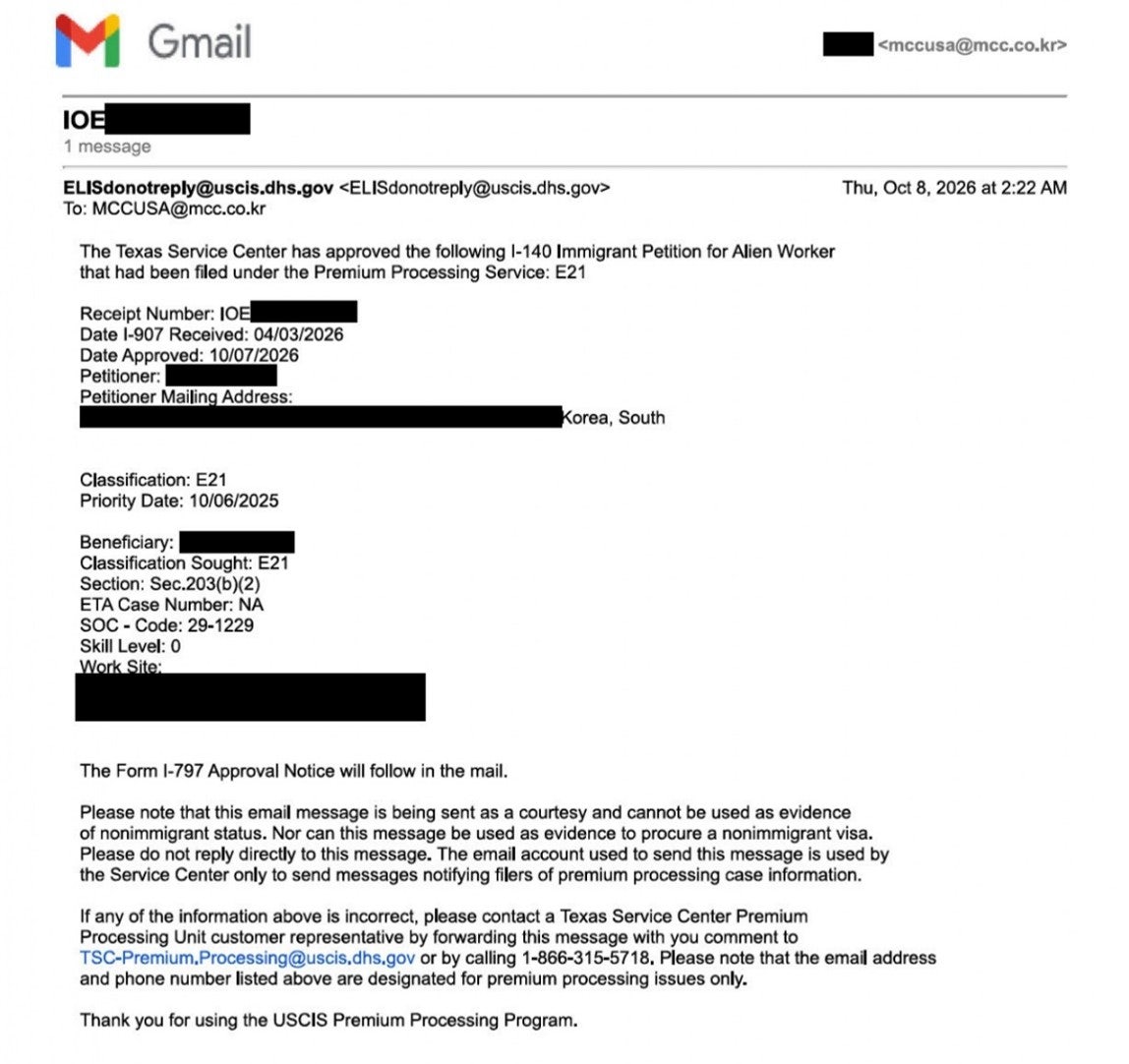
이번 승인은 그동안의 수속 과정을 고려할 때 더욱 의미 있는 결과였습니다. 신청자의 연구논문은 발표된 지 상당한 시간이 지난 상태였고, 청원서는 NIW 심사 환경이 까다로운 시기에 접수되었습니다. 이후 이민국은 기본적인 EB-2 자격 요건과 Dhanasar의 세 가지 심사 기준 모두에 대해 추가 증거를 요구했습니다.
이에 대한 답변에서는 추가자료를 제출하는 동시에, 신청자의 전문성과 연구 성과가 미국에서 어떤 실질적인 가치를 가질 수 있는지 구체적으로 설명했습니다.
그 결과 최종적으로 NIW 청원서 승인을 받을 수 있었습니다.
■ 이번 NIW 승인 사례가 보여주는 것
이번 사례는 NIW 신청자의 자격을 평가할 때 학술적 수치나 경력사항만으로 판단하기 어려운 이유를 잘 보여줍니다.
신청자는 논문 5편과 총 75회의 인용 실적을 보유하고 있었으며, 가장 최근 논문도 접수 당시 이미 5년이 지난 상태였습니다. 이러한 사실은 심사에서 고려할 요소였지만, 신청자의 연구가 가진 가치를 충분히 설명하지는 못했습니다.
논문을 자세히 분석한 결과, 과거 연구에서 제시한 방법과 성과가 현재 미국의 관련 연구에도 여전히 의미가 있다는 점을 확인할 수 있었습니다. 질병 발생에 영향을 미치는 요인을 연구해 온 전문 경력 역시 미국의 공중보건 연구와 예방의학 발전에 기여할 수 있다는 주장을 뒷받침했습니다.
이번 사례는 추가서류요청에 체계적으로 대응하는 것이 얼마나 중요한지도 보여줍니다. 심사관의 우려를 정확히 파악하고, 이를 해결하는 데 가장 효과적인 증빙자료를 선별하며, 신청자와 긴밀하게 협력하는 과정은 설득력 있는 답변서를 준비하는 데 중요한 역할을 합니다.
NIW 신청자마다 학력과 경력, 연구 성과, 앞으로의 활동 계획이 다릅니다. 따라서 신청자의 실제 성과와 확보 가능한 증거자료를 종합적으로 검토하고, 이를 미국에서의 향후 기여와 연결하는 맞춤형 전략이 필요합니다.
미국 이민국이 평가하는 것은 단순히 인상적인 숫자가 아닙니다. 제출된 증거가 NIW의 법적 요건을 충족하는지, 그리고 신청자가 미국에 의미 있는 기여를 할 수 있는지를 판단합니다.
이번 사례의 신청자는 전문적인 의학 지식과 연구 경험을 갖추고 있었으며, 오래된 연구논문에도 여전히 활용할 수 있는 중요한 성과가 담겨 있었습니다. 이러한 연구가 미국인의 건강과 질병 예방에 어떻게 기여할 수 있는지를 구체적으로 설명하는 것이 핵심이었습니다.
우리가 이민국에 깊은 인상을 주고자 했던 것은 논문 인용 횟수나 학술적 수치가 아니라, 신청자가 실제로 이룬 성과와 그 성과가 미국에 제공할 수 있는 가치였습니다.
그리고 이번 사례에서는 그 가치를 설득력 있게 전달하는 데 성공했습니다.
---------------------------
NIW Approval for a Physician:
The Value of Research Beyond Citation Counts
On October 7, 2026, an EB-2 NIW petition for a physician was approved by USCIS. The approval came almost one year after the petition was initially filed, following a Request for Evidence (RFE) that challenged all three prongs of the Matter of Dhanasar framework as well as the physician's underlying EB-2 eligibility.
The physician had valuable expertise in identifying and studying factors associated with causing disease, with research that could help improve public health and disease prevention. His accomplishments included academic research as well as contributions to the South Korean government. His expertise had meaningful potential applications in the United States, but demonstrating that value required careful preparation, particularly given the difficult NIW adjudication environment at the time.
This case provides an opportunity to examine several important aspects of NIW petition preparation, including how older academic research can remain valuable and why papers with low citation numbers deserve closer examination.
■ Understanding the Applicant Beyond His Academic Credentials
The initial consultation with the physician and his wife took place in person. Meeting them provided an opportunity to better understand his professional background, the nature of his research, and what he hoped to accomplish in the United States.
Personal consultations can be surprisingly valuable during NIW preparation. Academic records and professional accomplishments provide the foundation for the petition, but conversations with applicants often reveal details that are difficult to capture through questionnaires and documents alone.
In this case, getting to know the physician and his family also helped establish a productive working relationship. That familiarity would later prove useful when additional evidence needed to be gathered for an RFE response.
■ Older Publications and Difficult NIW Trends
One of the initial concerns involved the age of the physician's publications. At the time of filing, his most recent paper was already five years old.
Publication recency can become an issue in NIW adjudications. In another doctor’s case, USCIS had previously questioned the age of the applicant's research, making this a concern worth anticipating.
The timing of the petition presented another challenge. When the petition was filed on October 6, 2025, overall NIW approval rates were low, and the adjudication environment was particularly difficult.
The clients initially expressed interest in premium processing, but we recommended regular processing at that time, which still secures an early priority date. This recommendation reflected an assessment of the adjudication environment and the risks associated with seeking a fast decision.
Over the following months, overall NIW approval rates began to improve. Although the environment remained challenging, the petition was eventually upgraded to premium processing on April 3, 2026.
■ An RFE Challenging All Three Dhanasar Prongs
On May 19, 2026, USCIS issued an RFE.
By that point, RFEs had become extremely common in the NIW cases we were seeing. The clients had already been advised that an RFE was a high possibility.
An NIW petition represents a significant investment of time, money, energy, and hope. Understanding the possibility of an RFE helps applicants approach the process with realistic expectations and prepare for the additional work that is required.
The RFE challenged the physician's underlying EB-2 eligibility as well as all three prongs of the Matter of Dhanasar framework.
One particularly unusual request concerned his educational credentials. USCIS requested an educational evaluation that specifically addressed whether the physician had completed the U.S. equivalent of high school before entering college.
Although that is not ordinarily a requirement for establishing EB-2 advanced-degree eligibility, an evaluation that included this was obtained. This illustrates a practical consideration when responding to RFEs. When an officer requests additional documentation that can reasonably be obtained, addressing the concern is more productive than disputing whether the evidence should have been requested in the first place.
Much of the RFE consisted of standard language, but it did reference some of the physician's individual documentation. That was helpful because many RFEs provide very little case-specific reasoning. In this case, there was enough information to provide a roadmap for preparing a winning response.
■ Developing an RFE Action Plan and Prioritizing Evidence
Approximately one week after receiving the RFE, we had a virtual meeting with the physician’s wife to discuss the action plan. The meeting provided an opportunity to explain the officer's concerns, discuss the additional evidence that could strengthen the petition, and determine which documents the clients could realistically obtain. Potential sources of professional evaluations and supporting letters were also discussed, along with the timeframes involved in gathering the necessary materials.
An especially important part of the discussion involved deciding which documents deserved the greatest attention. An RFE may request several categories of evidence, but not every document carries the same evidentiary weight or contributes equally to resolving the officer's concerns. Some documents may directly address a weakness identified in the petition, while others may provide useful background information without substantially strengthening the underlying argument. For that reason, the meeting involved explaining which documents should be prioritized and where the clients' time and effort would be most effectively spent.
This distinction is particularly important when responding to an RFE under a deadline. Obtaining professional evaluations, recommendation letters, and other supporting documentation can require considerable coordination. Understanding which evidence is likely to be most persuasive helps applicants allocate their time and energy appropriately.
■ Why 75 Citations Across Five Publications Did Not Tell the Whole Story
One of the most common questions prospective NIW applicants ask concerns academic citations. Researchers often want to know how many publications or citations they need to qualify for NIW.
At the time of filing, this physician had five academic publications with a combined total of approximately 75 citations. Those numbers provided only a limited picture of the physician's contributions.
Rather than concentrating on citation totals, journal rankings, or his h-index, the preparation focused on examining the actual subject matter of his publications. This involved evaluating the research methods, the contributions made to the field, and how those accomplishments related to the physician's proposed work in the United States. This became especially important because of the age of his publications.
During the RFE response preparation, certain aspects of his earlier research were identified as remaining relevant to ongoing work in the United States. Some methods discussed in his older publications had still not been fully developed in contemporary U.S. research within the same field.
That provided a substantive basis for explaining why the passage of time had not eliminated the potential value of his research. The response identified specific contributions that remained useful and explained how his experience could support further developments in understanding disease-related risks and improving preventive healthcare in the United States.
A publication written five years ago can still contain knowledge that is relevant to current research. Its significance depends on what the research accomplished and how those contributions relate to the applicant's proposed endeavor.
This is why a tailored approach matters so much in NIW preparation.
Citation counts and academic metrics can provide useful evidence of a researcher's accomplishments, but the substance of those accomplishments deserves careful attention. A detailed examination of the research can reveal contributions that would otherwise be overlooked when evaluating an applicant primarily through numerical indicators.
For this physician, examining the actual content of his publications allowed the petition to present a much more powerful explanation of his qualifications and potential contributions to the United States.
■ Connecting the Physician's Expertise to U.S. Healthcare Needs
Another major component of the RFE response involved demonstrating the importance of the physician's proposed work.
The response relied on statements and publications from U.S. government sources discussing the importance of identifying factors that contribute to disease and improving preventive healthcare. Those government priorities were then connected to the physician's research experience and his plans for continuing related work in the United States. Supporting letters were also obtained from other physicians who could evaluate his professional contributions and explain their significance.
The response emphasized how his expertise in studying disease-related risk factors could contribute to a better understanding of health outcomes and support more effective approaches to disease prevention for Americans.
This connection between an applicant's professional history and proposed future work is particularly important in NIW petitions. USCIS must evaluate the proposed endeavor and the applicant's ability to advance it under the Dhanasar framework.
The physician's academic accomplishments and professional experience provided the foundation for explaining how his expertise could be applied to meaningful public health challenges in the United States. By connecting his previous work to current U.S. healthcare needs, the response presented a clearer picture of the broader value of his proposed endeavor.
■ The RFE Response and Final Approval
The completed RFE response was shipped from South Korea on July 28, 2026, well ahead of the submission deadline.
Because the response had to travel internationally, sufficient time was reserved for possible shipping delays or other logistical problems. After considerable effort had gone into preparing the additional evidence and legal arguments, ensuring timely delivery was an important final step.
On October 7, 2026, almost one year after the original petition was filed, an email arrived from the Texas Service Center Premium Processing Unit confirming that the physician's NIW petition had been approved.
■ What This NIW Approval Demonstrates
This case illustrates why evaluating an NIW applicant requires more than reviewing academic statistics or professional credentials.
The physician had 75 citations across five publications, with his most recent paper already five years old at the time of filing. Those facts were relevant, but they did not fully explain the value of his work.
A closer examination revealed methods and contributions that remained relevant to current research in the United States. His professional experience studying factors associated with disease also provided a foundation for explaining how he could contribute to public health research and preventive healthcare.
The case also demonstrates the importance of responding to an RFE with a clear strategy. Understanding the officer's concerns, identifying the evidence most likely to address them, and working closely with the applicant to get the documents that matter most.
Every NIW petition presents a different set of circumstances. The strongest approach is one that considers the applicant's actual accomplishments, the evidence available, and the relationship between their previous work and proposed contributions to the United States.
USCIS is not simply looking for impressive numbers. What matters is whether the evidence demonstrates that the applicant satisfies the NIW requirements and has the potential to make meaningful contributions to the United States.
In this case, we had a physician with valuable expertise, research that remained relevant, and a carefully developed explanation of how his work could benefit Americans.
We wanted to impress USCIS with the substance of his contributions rather than the numbers on his academic record. In this case, we impressed them.

미국 변호사와 이민 전문가가 꼼꼼하게 검토 후 최적의 솔루션을 안내해 드립니다.
