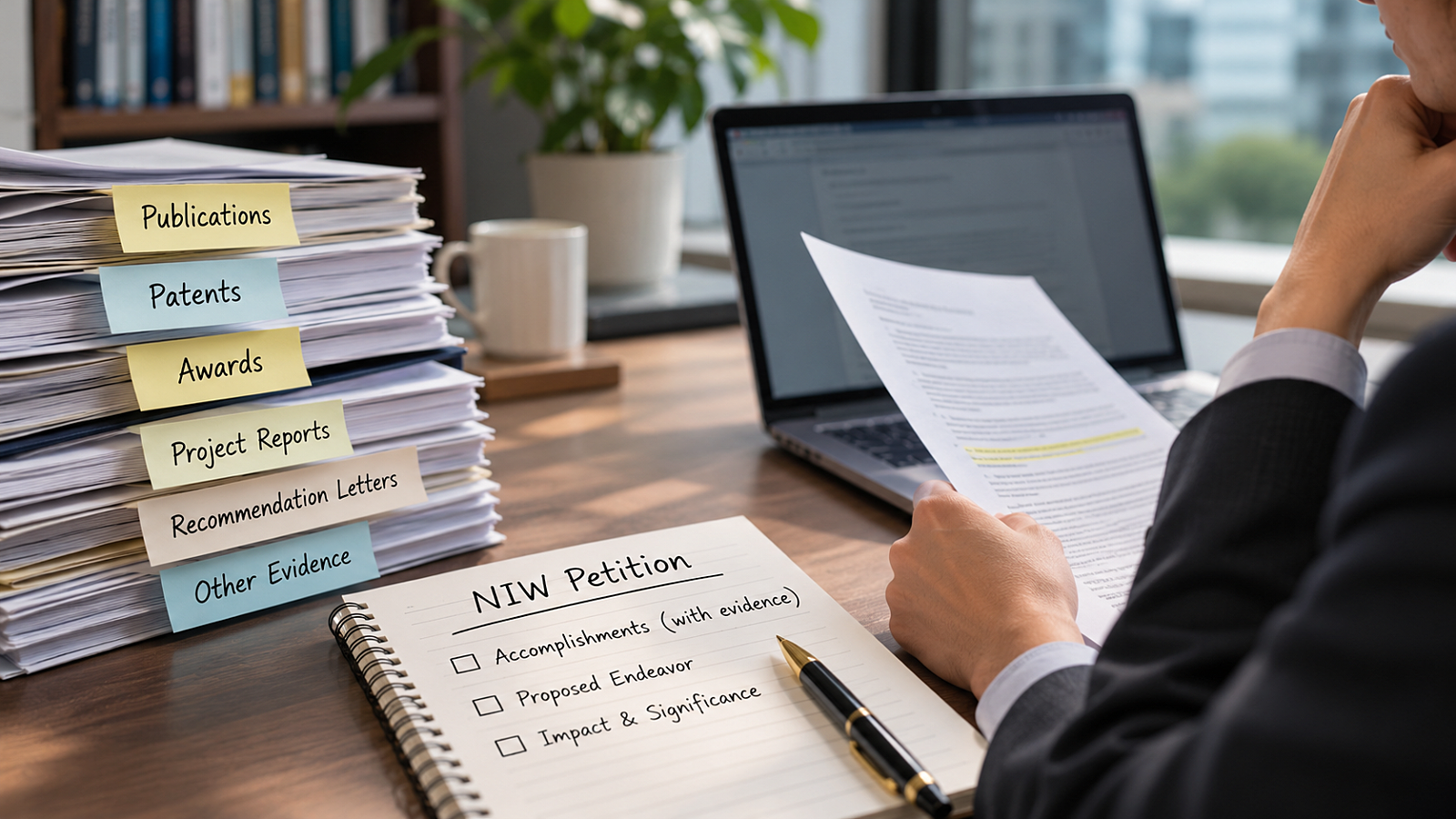
미국 NIW 영주권 신청, 어떤 서류를 준비해야 할까?
NIW 신청자마다 필요한 증빙서류가 달라지는 이유
NIW 상담을 진행하면서 가장 자주 받는 질문 중 하나는 “어떤 서류를 준비해야 하나요?”입니다. 대부분의 신청자는 정해진 서류 목록이 있고, 그에 맞춰 자료를 준비하면 된다고 생각합니다. 실제로 NIW 신청에서 자주 활용되는 증빙서류는 있지만, 최종적으로 어떤 자료를 제출할지는 신청자의 경력과 개별 케이스의 특성에 따라 상당히 달라집니다. 저희가 여러 NIW 케이스를 진행하면서 경험한 바로는, 최초 서류 검토가 끝난 후에 오히려 중요한 증빙자료가 발견되는 경우도 적지 않습니다.
1. 일반적인 증빙서류와 신청자들이 놓치기 쉬운 자료
NIW를 준비하는 분들은 대부분 논문, 특허, 수상 경력, 학술대회 발표, 추천서, 언론 보도, 논문 심사위원 활동과 같은 자료를 잘 알고 있습니다. 연구원이나 교수 등 학계에 종사하는 분들은 연구 성과가 외부에 공개된 경우가 많아 이러한 자료를 비교적 쉽게 확보할 수 있습니다. 반면 일반 기업에 근무하는 전문직 종사자들은 상황이 다릅니다. 업무 성과와 주요 프로젝트에 대한 기록이 회사 내부에만 남아 있는 경우가 많기 때문입니다.
저희가 진행했던 케이스 중에는 대규모 기술 프로젝트에 참여했지만, 논문이나 외부 보도자료에는 이름이 전혀 등장하지 않는 엔지니어들도 있었습니다. 이러한 경우에는 프로젝트 내부 보고서나 구체적인 기술적 기여를 확인해 주는 경력·프로젝트 검증서가 신청자의 성과를 입증하는 데 더 적합할 수 있습니다. 생산 효율이나 기술적 성능의 개선을 보여주는 회사의 실적 보고서 역시 유용한 자료가 될 수 있습니다. 다만 해당 성과에 신청자가 구체적으로 어떤 기여를 했는지 확인할 수 있어야 합니다.
실제로 NIW 청원서에 활용했던 자료 중에는 일반적인 서류 목록에서 쉽게 찾아보기 어려운 것들도 있습니다. 정부 연구비 지원 승인서, 선발 기준이 까다로운 전문 프로그램의 초청장, 정부기관의 공식 위촉 자료, 정부 연구시설의 무상 사용 승인서 등이 대표적인 사례입니다. 전문단체 회원 자격 역시 가입 과정에서 신청자의 전문적 성과를 심사하고 엄격한 선발 절차를 거치는 경우라면 의미 있는 증빙자료가 될 수 있습니다.
이 밖에도 인체 대상 임상시험에 대한 규제기관의 승인서, 신청자가 개발한 기술의 상업적 활용 계약을 발표한 제3자 보도자료, 기술 시연 프로그램 참가 기록 등이 활용될 수 있습니다. 학술지의 순위와 영향력 지표는 논문의 학술적 위상을 설명하는 데 도움이 되며, 산업계 기술 지침이나 가이드라인 제정에 참여한 기록은 신청자의 전문성이 업계 실무에 미친 영향을 보여줄 수 있습니다. 심지어 미국 기업의 채용 담당자와 주고받은 이메일도 향후 취업 가능성과 신청자의 전문성에 대한 미국 기업의 관심을 뒷받침하는 자료가 될 수 있습니다. 결국 중요한 것은 서류의 종류 자체보다 해당 자료를 통해 무엇을 입증하려는지에 있습니다.
2. 중요한 증빙자료는 수속 준비 과정에서 발견되기도 합니다
신청자 본인이 자신의 경력 중 어떤 부분이 NIW 심사에 도움이 되는지 충분히 인식하지 못하는 경우가 있습니다. 처음에는 이력서와 재직증명서, 몇 편의 논문만 제출했지만, 이후 상담 과정에서 기존 서류에는 전혀 언급되지 않았던 중요한 활동이나 성과가 확인되기도 합니다. 정부기관의 선별적인 전문 프로그램에 초청받은 경험, 산업계 기술 지침 개발에 참여한 이력, 본인이 개발한 기술이 다른 기관에서 실제로 채택된 사례 등이 여기에 해당합니다. 이러한 내용은 개별 프로젝트와 업무 경험을 보다 구체적으로 살펴보는 과정에서 드러나는 경우가 많습니다.
특히 오래전에 수행한 업무라면 신청자 스스로 특별한 성과라고 생각하지 않는 경우도 있습니다. 당시에는 일상적인 업무의 일부로 여겼기 때문에 관련 자료를 별도로 보관하지 않았거나 이력서에도 기재하지 않았을 수 있습니다. 그러나 내용을 자세히 검토해 보면 NIW 청원서의 중요한 부분을 뒷받침할 수 있는 경험으로 확인되기도 합니다. 이때는 당시의 기록이 현재까지 남아 있는지, 그리고 해당 자료를 통해 신청자의 실제 참여와 기여를 객관적으로 입증할 수 있는지를 검토해야 합니다.
NIW 수속 준비는 신청자와 지속적으로 소통하면서 증빙자료를 발굴하는 과정이기도 합니다. 일반적으로 신청자가 이미 보유한 서류부터 검토하고, 이후 추가 질문을 통해 주요 프로젝트와 업무 경력을 보다 자세히 확인합니다. 어떤 자료를 검토하다가 새로운 질문이 생기고, 그 과정에서 추가로 확인할 만한 성과가 발견되기도 합니다. 반대로 중요한 성과를 먼저 확인한 뒤 이를 입증할 수 있는 적절한 자료를 신청자와 함께 찾아가는 경우도 있습니다. 저희가 확보했던 주요 증빙자료 중 상당수는 최초 서류 검토 이후 진행된 추가 상담 과정에서 발견되었습니다.
3. 회사의 기밀유지 의무로 증빙자료 확보가 어려운 경우
NIW 수속을 진행하면서 자주 접하는 또 다른 문제는 기업의 기밀유지 의무입니다. 특히 민간기업에서 오랫동안 근무한 엔지니어나 기술 전문직 종사자들은 중요한 프로젝트에 참여했더라도 관련 자료를 외부에 공개하기 어려운 경우가 많습니다. 사내 설계도면, 프로젝트 성과 보고서, 기술 사양서 등에는 기업의 영업비밀이나 독점적인 기술정보가 포함되어 있을 수 있습니다. 회사의 내부 규정과 업무 특성에 따라 특정 프로젝트의 세부 내용을 공개하거나 본인의 담당 업무를 설명하는 문서조차 외부에 제공하기 어려울 수 있습니다.
이러한 경우에는 회사의 기밀유지 규정을 준수하면서 다른 방법으로 신청자의 기여를 입증해야 합니다. 회사가 공식적으로 발표한 보도자료나 제3자가 작성한 산업 보고서는 프로젝트의 규모와 중요성을 설명하는 데 활용할 수 있습니다. 또한 적절한 회사의 승인을 받아 작성된 상사 또는 기술 담당 동료의 프로젝트 검증서를 통해 신청자의 담당 업무와 구체적인 기여 내용을 확인할 수도 있습니다. 이미 공개된 기술자료나 산업 보고서는 해당 업무의 기술적 배경과 중요성을 설명하는 데 도움이 되며, 허용되는 범위에서 기밀정보를 삭제하거나 가린 문서를 제출하는 방법도 고려할 수 있습니다.
경우에 따라서는 서로 다른 여러 자료를 함께 검토해야 신청자의 성과를 충분히 입증할 수 있습니다. 예를 들어 회사의 공식 보도자료를 통해 대규모 프로젝트가 실제로 수행되었다는 사실을 확인하고, 별도의 프로젝트 검증서로 해당 프로젝트에서 신청자가 수행한 역할을 설명할 수 있습니다. 여기에 관련 기술 보고서를 추가하면 프로젝트에 사용된 기술의 중요성과 산업적 의미를 뒷받침할 수 있습니다. 이처럼 여러 자료를 연결하면 하나의 문서만으로는 입증하기 어려운 사실도 보다 구체적으로 설명할 수 있습니다.
4. 결국 NIW 심사의 핵심은 무엇을 입증할 수 있는가입니다
저희가 NIW 청원서를 준비하면서 중요하게 생각하는 원칙 중 하나는 신청자의 전문적 성과가 신뢰할 수 있는 객관적인 자료로 뒷받침되어야 한다는 점입니다. 아무리 오랜 기간 중요한 기술을 개발하거나 복잡한 프로젝트를 이끌어 왔더라도, 실제로 어떤 성과를 이루었고 그 과정에서 어떠한 역할을 수행했는지를 입증해야 합니다. 또한 그 성과가 왜 중요한지도 설명할 수 있어야 합니다. 이러한 원칙은 신청자가 미국에서 앞으로 수행하려는 활동인 Proposed Endeavor에도 적용됩니다. 미국 이민국(USCIS)은 신청자가 추진하려는 활동의 중요성과 함께, 신청자가 이를 실현할 수 있는 충분한 역량과 준비를 갖추고 있는지를 심사합니다.
비슷한 학력과 경력을 가진 두 신청자라도 실제 제출하는 NIW 증빙서류는 크게 달라질 수 있습니다. 전문 분야가 같더라도 입증해야 할 성과와 확보할 수 있는 자료가 서로 다르기 때문입니다. 이미 언론 보도나 논문 등을 통해 업무 성과가 널리 알려진 신청자도 있지만, 관련 기록이 대부분 회사 내부에 남아 있어 경력을 보다 면밀하게 검토해야 하는 신청자도 있습니다. 같은 직종에 종사하더라도 실제 담당했던 업무와 성취한 결과에 따라 증빙자료를 구성하는 방법은 달라집니다.
저희가 여러 NIW 케이스를 진행하면서 확인한 것은 신청자의 경력과 성과만큼이나 이를 입증할 수 있는 자료를 확보하는 일이 중요하다는 점입니다. 적절한 증빙자료를 찾는 과정은 처음 예상했던 것보다 많은 검토와 확인을 필요로 하며, 실제로 수속 준비가 시작된 이후의 상담에서 중요한 자료가 발견되는 경우도 많습니다. 각각의 NIW 케이스에는 서로 다른 검토 사항이 존재하고, 그에 대한 답을 찾으며 객관적인 증빙자료를 하나씩 확보해 나가는 과정이 설득력 있는 NIW 청원서를 완성하는 중요한 부분입니다.
--------------------------
What Documents Do You Need for an NIW Petition?
Why the evidence supporting an NIW petition varies from case to case
One of the most common questions we receive from prospective NIW applicants is, “What documents do I need to prepare?” Most applicants understandably expect a standard checklist of documents they can gather and submit for review. Certain types of evidence appear frequently in NIW petitions, but the documents we end up using depend heavily on the applicant's background and the specifics of the case. In our experience, some of the most valuable evidence is discovered well after the initial document review.
1. Common Evidence and the Documents Applicants Often Overlook
Most NIW applicants are familiar with traditional forms of professional evidence, such as research publications, patents, professional awards, conference presentations, recommendation letters, media coverage, and experience reviewing academic papers. For researchers and academics, these documents are often relatively straightforward to obtain because much of their work is already publicly documented. For professionals working in private companies, the situation can be quite different. Much of their work may only be documented internally.
We've worked with engineers who contributed to major technology projects, but whose names never appeared in a research paper or public announcement. In such cases, internal project reports or letters verifying specific technical contributions may provide more relevant evidence of the applicant's accomplishments. Company performance reports documenting improvements in efficiency or technical performance can also be useful, particularly when the applicant's individual contribution to those improvements can be established.
Some of the documents we've used in NIW petitions are probably not what most applicants would expect. These have included government research funding approvals, invitations to highly selective professional programs, appointments by government institutions, and offers to use government research facilities at no cost. Membership in an exclusive professional organization may also be relevant, particularly when admission requires demonstrated achievements and involves a selective evaluation process.
Other examples include regulatory approvals for human clinical trials, third-party press releases announcing commercial agreements to use an applicant's technology, and participation in technology demonstrations. Journal rankings can help establish the standing of a publication, while contributions to industry guidelines may demonstrate how an applicant's expertise has influenced professional practices. Even email correspondence with recruiters at U.S. companies may help document prospective employment opportunities and interest in the applicant's expertise. Whether a particular document is useful comes down to what we're trying to prove in that situation.
2. Important Evidence Is Often Discovered During Preparation
Applicants often overlook accomplishments that could be useful to their NIW cases. Someone may initially provide a CV, employment records, and several publications, but further discussions sometimes reveal experiences that were never mentioned in those documents. An applicant might have been invited to participate in a selective government initiative, contributed to an industry guideline, or developed technology that was subsequently adopted by another organization. These details often emerge when we begin discussing specific projects and professional experiences in greater depth.
Applicants sometimes regard these experiences as ordinary parts of their jobs, especially when the work took place several years earlier. They may not have considered keeping documentation or mentioning the experience in their CV. When we take a closer look, however, those experiences sometimes turn out to be exactly what we need to support an important part of the petition. The challenge then becomes identifying what records still exist and whether those records can substantiate the applicant's involvement.
NIW preparation is an ongoing conversation. We usually start with the documents an applicant already has. From there, we ask follow-up questions, review particular projects in more detail, and figure out what additional evidence might be available. Sometimes a document leads to another question, which reveals an accomplishment that deserves further examination. Other times, we identify an important contribution first and then work with the applicant to find an appropriate way to document it. Some of the strongest evidence we've found has come from follow-up conversations after the initial document review.
3. When Company Confidentiality Limits Available Evidence
Another situation we frequently encounter involves applicants who have spent much of their careers working for private companies. Many engineers and technical professionals have contributed to significant projects, but the records documenting those contributions are subject to company confidentiality requirements. Internal engineering designs, project performance reports, and technical specifications may contain proprietary information. Depending on the employer and the nature of the work, applicants may face restrictions on disclosing particular project details or even sharing documents that describe their own responsibilities.
We have to work within those restrictions, which sometimes means finding another way to document the applicant's contributions. Publicly available company announcements or third-party reports may help establish the scope and significance of a project. A verification letter from a supervisor or technical colleague, prepared with the appropriate authorization, may explain the applicant's responsibilities and specific contributions. In other situations, publicly disclosed technical information or industry reports may help establish the broader context of the work. Where permitted, redacted documents may also be useful.
There are cases where several pieces of evidence need to be considered together. A public announcement might establish that a major project took place, while an authorized verification letter explains the applicant's individual involvement. A separate technical report might provide context for the significance of the underlying technology. Combining these records can sometimes establish facts that would be difficult to prove with any single document.
4. Ultimately, NIW Is About What You Can Prove
One principle we frequently emphasize when preparing NIW petitions is that professional accomplishments must be supported by credible evidence. An applicant may have spent decades developing important technologies or leading complex projects, but the petition must establish what the applicant personally accomplished and why those contributions matter. The same principle applies to the proposed endeavor. USCIS considers the significance of the work the applicant intends to pursue in the United States and whether the applicant is well positioned to advance it.
Two applicants with similar qualifications may ultimately submit very different supporting documents. Their professional backgrounds may be comparable, but the accomplishments they need to establish and the records available to support them can differ considerably. Some applicants have extensive public documentation of their work, while others require a more detailed review of their professional history to identify appropriate evidence. Even within the same profession, the approach can vary depending on the person's actual responsibilities and achievements.
One thing we've learned from preparing NIW petitions is that an applicant's accomplishments are only as useful as our ability to document them. Finding that evidence often takes more work than applicants initially expect, and some of the most useful documents are identified through conversations that take place after preparation has already begun. Every case presents its own questions, and answering those questions is a significant part of building a well-supported petition.

미국 변호사와 이민 전문가가 꼼꼼하게 검토 후 최적의 솔루션을 안내해 드립니다.
