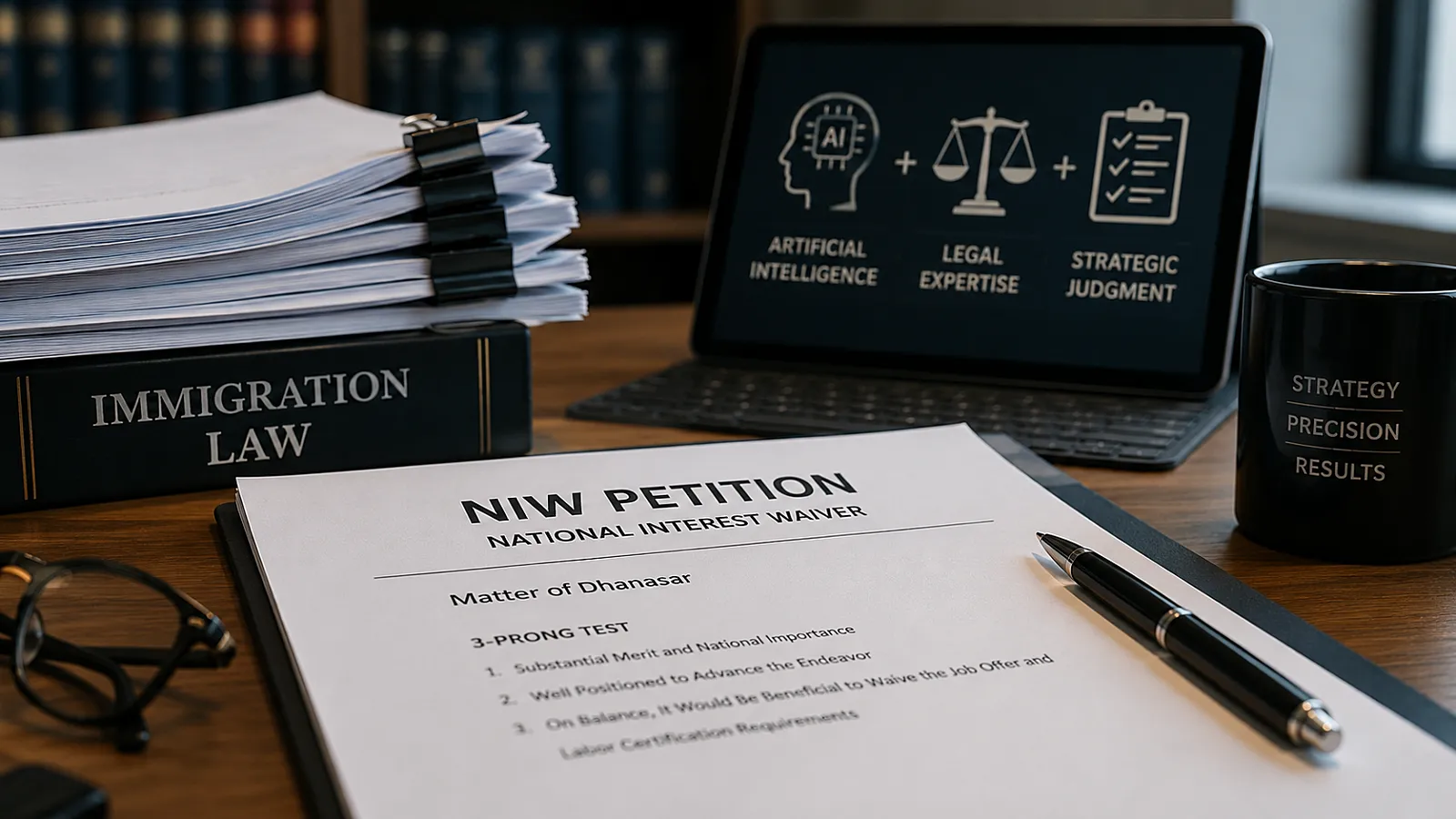
오늘날과 같이 심사 기준이 까다로운 이민 환경에서 매우 위험한 추세가 나타나고 있습니다. 바로 NIW 청원서를 작성할 때 AI에 지나치게 의존하는 현상입니다. AI는 단순 업무를 처리하는 데는 인상적인 도구일 수 있지만, Matter of Dhanasar 판례의 복잡한 법리를 다루는 데 AI를 사용하는 것은 매우 위험한 도박입니다. NIW 주력으로 다루는 변호사로서 최근 AI를 활용해 작성된 NIW 청원서들이 거절되는 사례를 점점 더 많이 목격하고 있습니다. 귀하의 '국가적 중요성(National Importance)'을 논증하는 과정에서 알고리즘에만 의존하는 것이 왜 결국 거절이라는 결과를 초래하는지 그 이유를 설명해 드리고자 합니다.
■ 케이스의 전략적 방향은 누가 결정하는가
분명히 말씀드리지만, AI가 아예 쓸모없는 것은 아닙니다. 문서의 서식을 맞추거나 방대한 분량의 기술 논문을 요약하고, 초안의 문장을 다듬는 효율성 측면에서는 매우 훌륭한 자산입니다. 복잡한 문장을 구사하는 속도만큼은 인간보다 훨씬 뛰어납니다. 하지만 AI는 글을 쓰는 데는 효율적일지 몰라도, 법률적 논리를 개발할 수 있을 만큼 영리하지는 않습니다. 성공적인 NIW 청원에는 이민법의 지형을 꿰뚫어 보는 전략가가 필요합니다. Petition Letter와 Personal Statement부터 Recommendation Letters에 이르기까지, 제출되는 모든 서면 자료는 구체적인 법적 논거를 삽입할 수 있는 전략적 기회입니다. 이는 미국 이민국(USCIS) 심사관들이 중점적으로 검토하도록 훈련받은 정교한 문구 선택과 고도의 기획력을 요구합니다. AI에게는 인간 심사관의 공감을 이끌어내거나, 신청자의 기술적 연구가 미국의 국가적 이익과 어떻게 연결되는지에 대한 구체적이고 실질적인 서사를 만들어낼 수 있는 '인간적인 감각'이 결여되어 있습니다.
■ 제1단계 요건의 혼동: Substantial Merit와 National Importance
AI가 가장 자주 범하는 실수 중 하나는 Substantial Merit와 National Importance를 혼동하여 서술하는 것입니다. 이 두 개념은 모두 Dhanasar 판례의 Prong 1에 해당하지만, 법률적 의미는 엄연히 다릅니다. Substantial Merit는 해당 분야가 미국에 주는 가치 그 자체에 초점을 맞춥니다. 즉, 신청자가 하고자 하는 일이 시도할 만한 가치가 있는지, 그리고 사회적으로 유익한 영향력을 가진 분야인지를 입증하는 것입니다. 반면 National Importance는 신청자가 제안한 Proposed Endeavor가 가져올 파급력에 집중합니다. 신청자의 연구나 사업이 경제, 국가 안보, 공중 보건 등 미국 전역에 영향을 미칠 수 있는 잠재력이 있는지를 묻는 것입니다. AI 모델은 종종 이 두 가지 요건을 개별적으로 충족하지 못하는 막연하고 일반적인 중요성만을 나열하곤 합니다. 연구자 중에는 연구 분야의 가치는 매우 훌륭하지만, 이민국이 정의하는 National Importance가 부족한 경우가 많습니다. AI는 이러한 입증 책임의 차이를 스스로 구분할 만큼 정교하지 못하며, 그 결과 인간 심사관이 읽기에 매우 모호한 청원서가 만들어지게 됩니다.
■ 교육 경력의 함정: 법률적 뉘앙스의 부재
AI는 종종 해당 분야의 일반적인 중요성과 신청자 개인의 기여도를 구분하지 못합니다. 최근 저는 AI 자동화 시스템에 과도하게 의존하는 업체와 진행했다가 거절된 고객의 케이스를 검토한 적이 있습니다. 그 업체의 강점은 최신 AI를 사용해 NIW 청원서를 준비한다는 것이었습니다. 하지만 AI는 신청자의 대학 강사로서의 경력을 지나치게 강조했습니다. 숙련된 NIW 변호사라면 누구나 알고 있듯이, 주요 판례는 교육 활동이 Substantial Merit는 가질 수 있어도 특정 지역에 국한된 혜택(Localized Benefit)이라는 이유로 National Importance 요건은 충족하지 못한다고 명시하고 있습니다. 해당 업체는 법률적 전문 지식 대신 AI의 논리에 의존했기 때문에, 결과적으로 Dhanasar Prongs 요건 심사에 법률적으로 불리한 사실을 강조하게 되었고 이는 곧바로 거절로 이어졌습니다.
■ 의미 없는 유창함 vs 설득력 있는 문장
AI는 문법적으로 완벽한 문장을 만드는 데는 탁월하지만, 심사관을 설득하는 글을 쓰지는 못합니다. 저는 신청자들이 AI를 사용해 만든 초안을 많이 검토해 보았는데, 그 내용이 사실상 아무런 의미가 없는 경우가 많았습니다. 겉보기에는 세련된 문장들로 가득 차 있지만, 명확하고 논리적인 논거를 전달하는 데는 실패했기 때문입니다. 심사관들은 서류가 간결하지 않을 때 피로감을 느낍니다. 알맹이 없는 유창한 문장들의 나열은 심사관에게 이 청원서에 실질적인 내용이 부족하다는 신호를 보내는 것과 같습니다. 설령 유효한 논거가 포함되어 있더라도, 장황한 텍스트 속에서 이를 일일이 찾아내야 한다면 심사관이 이를 긍정적으로 수용할 가능성은 낮아집니다.
■ 기밀 유지와 학습 데이터의 한계
AI가 이 수준의 업무를 수행하지 못하는 데에는 윤리적인 이유도 있습니다. 신뢰할 수 있는 이민 법무법인은 엄격한 기밀 유지 원칙에 따라 운영됩니다. 제대로 된 회사라면 고객의 기밀을 존중하며, 외부 제3자가 거대 언어 모델(LLM) 학습을 위해 검토할 수 있는 AI 플랫폼에 실제 고객의 서류를 입력하지 않습니다. 결과적으로 현재 AI 모델들이 학습하는 데이터는 대부분 낮은 품질의 초안이나 개인이 직접 준비한 자료, 또는 실패한 청원서들의 집합체인 경우가 많습니다. 즉, AI는 상위권 전문가들의 노하우를 배우는 것이 아니라 수준 낮은 사례들을 학습하고 있는 것입니다.
■ 도구일 뿐, 대체재가 될 수 없습니다
AI는 도구일 뿐, 결코 실무자의 전문성을 대체할 수 있는 수준이 아닙니다. AI는 오직 입력된 명령어(Prompt)의 수준만큼만 결과물을 만들어낼 수 있습니다. AI를 사용하는 사람이 필요한 법적 논리와 심사관의 논리 구조를 정확히 파악하지 못하고 있다면, 그 결과물은 근본적인 결함을 가질 수밖에 없습니다. 귀하의 미국 이민이라는 미래가 걸린 청원서라면, 단순히 듣고 싶은 답변을 내놓는 알고리즘보다는 실무자의 판단력과 판례에 대한 깊은 이해를 바탕으로 전략을 세우는 것이 무엇보다 중요합니다.
--------------------------------------------
Using AI for your NIW Petition
In the current landscape of high-stakes immigration, a dangerous trend has emerged: the over-reliance on AI to draft National Interest Waiver (NIW) petitions. While AI is an impressive tool for basic tasks, using it to navigate the complexities of Matter of Dhanasar is proving to be a high-risk gamble. As an NIW practitioner, I am increasingly seeing the fallout of the AI NIW petition. Here is why relying on an algorithm to argue your national importance is often a recipe for a denial.
Who Is Directing the Case?
To be clear, AI is not without its uses. In terms of sheer efficiency, such as formatting, summarizing long technical papers, or cleaning up prose, it is an impressive asset. The speed it can articulate complex sentences is much better than a human. However, while AI is efficient at the writing, it is not smart enough to be the one developing the ideas. A successful NIW petition requires a strategist who understands the legal landscape. Every written document, from the petition letter and personal statement to the recommendation letters, is an opportunity to insert specific legal arguments. This requires a high degree of planning and the use of precise phrasing that USCIS adjudicators are trained to scan for. AI lacks the human sense required to appeal to a human reader or to create the concrete, tangible narratives that connect technical research to the national interest of the United States.
The Prong One Confusion: Substantial Merit vs. National Importance
One of the most frequent mistakes AI makes is merging Substantial Merit and National Importance. While they both sit under the first prong of the Dhanasar test, they have distinct legal meanings. Substantial Merit focuses on the recognition of the field's value to the United States. It establishes that the endeavor itself is worth doing and has a beneficial societal impact. National Importance focuses on the broader impact of your specific work. It asks whether your particular proposed endeavor has significant potential to affect the country as a whole, such as through the economy, national security, or public health. AI models often produce a generic importance argument that fails to satisfy both requirements individually. A researcher may have work with incredible merit that simply lacks national importance as defined by USCIS. AI is not sophisticated enough to separate these two burdens of proof by itself, resulting in a petition that feels vague to an actual human officer.
The Teaching Trap: A Lesson in Legal Nuance
AI frequently conflates general field importance with your individual contribution. I recently reviewed a petition for a client who had been denied after working with a firm that relied too heavily on AI automation. The firm’s selling point was using the latest AI to prepare NIW petitions. The AI had emphasized the client’s role as a university teacher. Any experienced practitioner knows that the precedent case specifically states that teaching, while having substantial merit, does not satisfy the National Importance prong because it is a localized benefit. Because that firm relied on AI logic rather than legal expertise, they highlighted a fact that was legally harmful to the Dhanasar 3-prong test, leading straight to a denial.
Meaningless Fluency vs. Convincing Writing
AI is incredibly good at constructing grammatically perfect sentences, but it is not capable of convincing writing. I have reviewed many first drafts created by applicants using AI that essentially have no meaning. They are filled with sophisticated-sounding sentences that fail to convey a clear, logical argument. Adjudicators get frustrated if documents are not concise. A wall of meaningless fluency often signals to an officer that the petition lacks substance. Even if there is a valid argument made, USCIS adjudicators are going to be less enthusiastic to accept it if they must sift through longwinded text.
The Confidentiality and Training Gap
There is also an ethical reason why AI fails at this level. Serious immigration firms operate under strict confidentiality principles. Legitimate companies respect client confidentiality and do not feed actual documents to AI if it can be reviewed by third parties for large language model learning. Consequently, AI models are mostly trained on a graveyard of lower-quality, DIY, or failed petitions. AI is not learning from elite practitioners; it is learning from low quality examples.
A Tool Not a Substitute
AI is a tool, not yet a substitute for an experienced attorney. It can only create something as good as the prompt it is given. If the person prompting the AI lacks an accurate grasp of the legal arguments and human adjudicator logic required, the output will be inherently flawed. If you are betting your future in the United States on a petition, ensure it is built on professional judgment and a deep understanding of USCIS precedents, not just an algorithm telling you what it thinks you want to hear.

