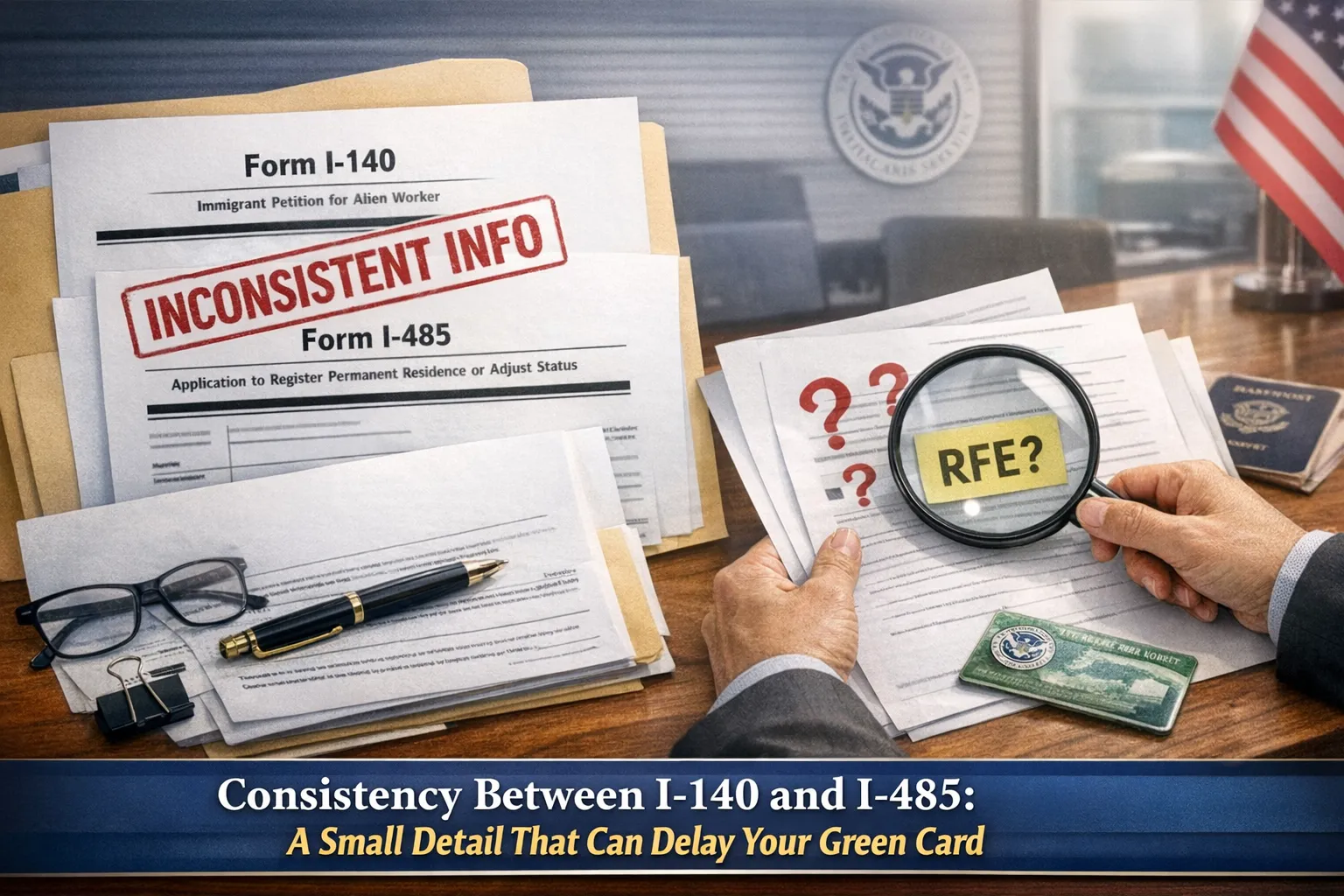
2026년 3월과 4월 비자 게시판(Visa Bulletin)에서 많은 카테고리가 ‘Current’ 상태로 전환되면서, 다수의 신청자들이 이제 I-140 단계에서 I-485 신분조정 신청 단계로 넘어가고 있습니다. 이 과정에서 많은 분들이 과거에 제출했던 내용을 다시 검토하게 되고, 일부 답변이 불완전하거나 간략하게 작성되었거나, 현재 제출 내용과 완전히 일치하지 않는다는 점을 인지하게 됩니다.
바로 이 지점에서 중요한 문제가 발생합니다. 바로 서류 간 ‘일관성’입니다.
■ 왜 일관성이 중요한가
I-140 청원서와 I-485 신청서는 모두 위증 시 처벌을 받을 수 있다는 전제 하에 제출됩니다. 즉, 신청자는 본인이 제출한 모든 정보가 사실이며 정확하다는 점을 확인하고 서명하게 됩니다. USCIS는 각 서류를 개별적으로만 검토하지 않습니다. 전체 기록을 종합적으로 비교하여 심사합니다.
작은 불일치라도 심사관의 의문을 불러일으킬 수 있습니다. 근무 기간, 직무 내용, 주소, 과거 이민 이력, 또는 사실을 설명하는 방식의 차이 등은 추가 확인이 필요하다고 판단될 수 있습니다. 이러한 경우 많은 경우 RFE(Request for Evidence, 추가서류요청)로 이어집니다.
이러한 문제는 대부분 중대한 결격 사유 때문이 아닙니다. 정보의 공백, 누락, 또는 초기 단계에서 지나치게 간략하게 작성된 답변에서 비롯되는 경우가 많습니다.
■ 허위진술과 단순 불일치의 차이
USCIS가 불일치를 어떻게 해석할 수 있는지 이해하는 것이 중요합니다. 서로 다른 서류 간 정보가 일치하지 않는 경우, 신청자가 각 서류에 대해 정확성을 확인하고 서명했기 때문에 형식적으로는 ‘허위진술(misrepresentation)’로 해석될 여지가 있습니다.
다만, 대부분의 경우 이는 고의적인 허위진술은 아닙니다. 실제로는 오해, 기억의 차이, 번역 과정에서의 문제, 또는 초기 단계에서 답변을 단순화하는 과정에서 발생하는 경우가 많습니다.
이 차이는 매우 중요합니다. 단순 실수와 의도적인 허위 기재는 전혀 다른 문제입니다. 그러나 USCIS 입장에서는 이러한 불일치 역시 설명되고 정리되어야 하는 사항으로 보게 됩니다.
■ 왜 지금 더 많이 문제가 되는가
우선순위일자(priority date)가 열리지 않았던 시기에는 많은 신청자들이 I-140 승인 자체에 집중하는 경향이 있었습니다. 당시에는 일부 세부사항이 자격 요건에 직접적인 영향을 주지 않는다고 판단되어 중요하게 여겨지지 않았을 수 있습니다.
하지만 현재는 I-485 접수가 가능해지면서 보다 상세한 개인 이력과 이민 이력을 요구받게 됩니다. 이 과정에서 과거에 작성했던 내용이 다시 검토되면서 이전 답변과의 차이가 드러나게 됩니다.
그 결과, 많은 신청자들이 기존 답변을 다시 확인하면서 일부 내용을 수정하거나 보완해야 할 필요성을 인지하게 됩니다. 이는 자연스러운 과정이지만, 신중하게 접근해야 합니다.
■ 실무적인 유의사항
대부분의 불일치는 수정 가능하며 승인 자체를 막는 요소는 아닙니다. 다만, 적절히 정리되지 않을 경우 심사 지연으로 이어질 수 있습니다. RFE가 발생하면 수개월 이상의 추가 시간이 소요될 수 있고, 불필요한 스트레스로 이어질 수 있습니다.
I-485를 제출하기 전에는 기존에 제출한 서류를 충분히 검토하는 것이 중요합니다. 근무 이력, 주소, 이민 기록, 개인 정보 등이 서로 일관되게 작성되어 있는지 확인해야 합니다. 이전에 제출한 내용이 불완전하거나 불명확했다면, USCIS의 지적을 기다리기보다는 사전에 보완하는 것이 바람직합니다.
이 단계에서의 철저한 검토는 불필요한 지연을 방지하고, 전체 절차를 보다 원활하게 진행하는 데 큰 도움이 됩니다.
---------------------------------------------
Consistency Between I-140 and I-485: A Small Detail That Can Delay Your Green Card
With the Visa Bulletin becoming current for many applicants in March and April 2026, a large number of individuals are now moving from the I-140 stage to filing Form I-485. At this point, many applicants are revisiting information they previously provided and are realizing that certain answers were incomplete, simplified, or not entirely consistent with their current filings.
This is where an important issue arises: consistency between forms.
Why Consistency Matters
Both the I-140 petition and the I-485 application are submitted under penalty of perjury. Applicants are certifying that the information provided is true and correct to the best of their knowledge. When USCIS reviews a case, officers do not look at each form in isolation. They compare filings across the entire record.
Even small inconsistencies can raise questions. Differences in employment dates, job duties, addresses, prior immigration history, or even how certain facts were described can lead an officer to pause and ask for clarification. In many cases, this results in a Request for Evidence (RFE).
These issues are often not about major problems. They are about gaps, omissions, or answers that were initially provided too briefly.
Misrepresentation vs. Inconsistency
It is important to understand how USCIS may view inconsistencies. When information does not match across filings, it can be interpreted as a form of misrepresentation because the applicant has signed each form confirming its accuracy.
However, most of these situations are not willful misrepresentation. They usually arise from misunderstandings, memory gaps, translation issues, or the tendency to simplify answers during earlier stages of the process.
That distinction matters. A genuine mistake is very different from an intentional misstatement. But from USCIS’s perspective, the inconsistency still needs to be explained and resolved.
Why This Is Coming Up More Now
When priority dates were not current, many applicants focused primarily on getting the I-140 approved. Some details may not have seemed critical at the time, especially if they did not directly affect eligibility.
Now that adjustment of status is available, applicants must provide a more complete personal and immigration history on the I-485. This often brings earlier answers back into focus.
As a result, applicants are seeing prior responses again and realizing that certain information needs to be clarified or corrected. This is a normal part of the process, but it requires careful handling.
Practical Takeaway
Most inconsistencies are fixable and do not prevent approval. However, they can slow the case down if not addressed properly. An RFE can add months to the timeline and create unnecessary stress.
Before filing the I-485, it is worth taking the time to review prior submissions carefully. Make sure that dates, employment history, immigration records, and personal details are consistent. If something was incomplete or unclear in an earlier filing, it is better to address it proactively rather than wait for USCIS to raise the issue.
A careful review at this stage can help keep the process moving smoothly and avoid delays that are otherwise preventable.

