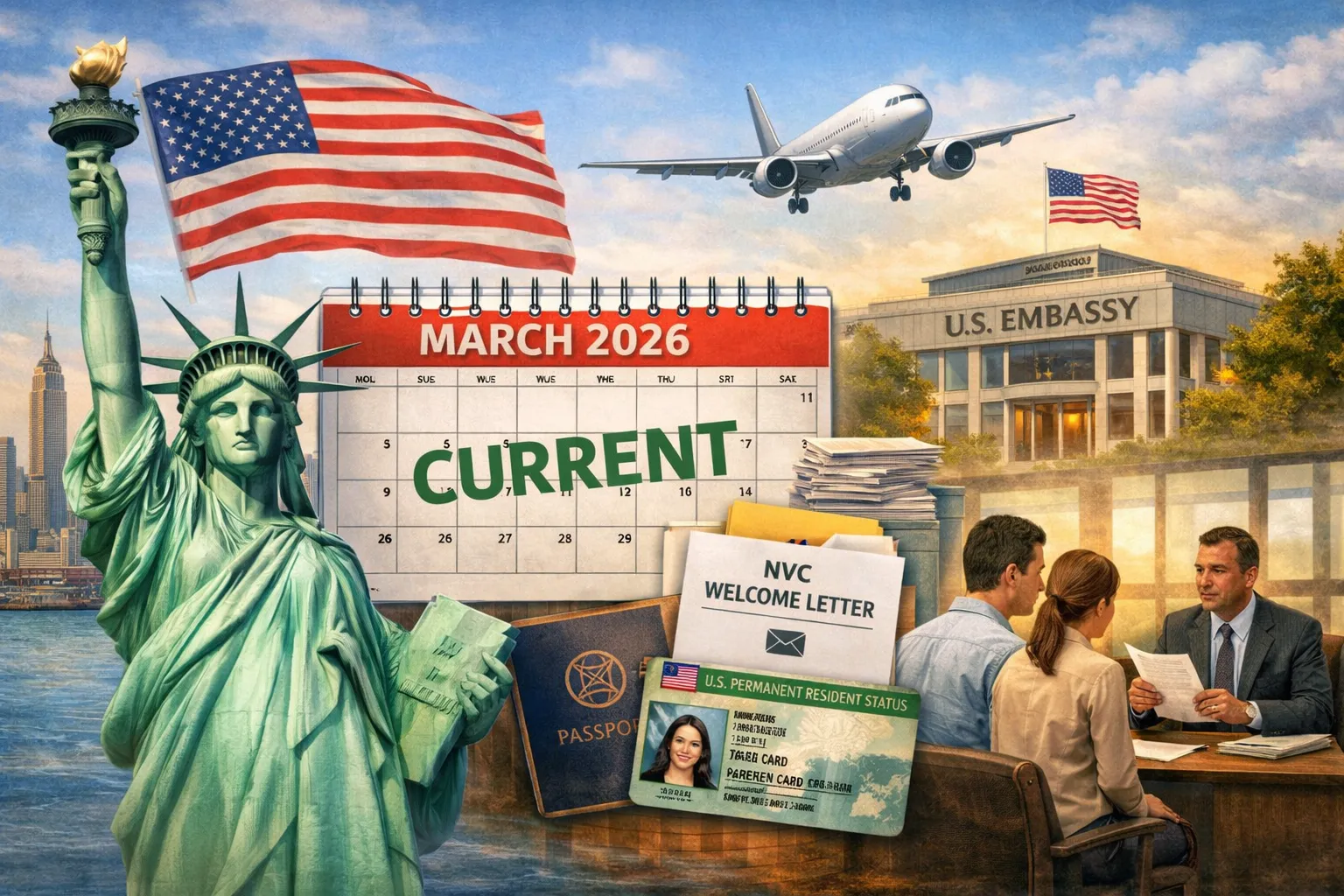
최근 미국 국무부는 2026년 3월 비자 문호(Visa Bulletin)를 발표했습니다. 비자 문호는 보통 해당 월이 시작되기 약 2주 전에 발표되지만, 그 안에 기재된 날짜는 해당 월의 첫날부터 효력이 발생합니다. 취업이민 2순위(EB-2), 특히 NIW 신청자들에게 이번 2026년 3월 비자 문호는 매우 큰 변화를 의미합니다.
지난 몇 년간 취업이민 2순위에는 지속적인 적체(backlog)가 있었습니다. 2026년 2월 기준으로도 개인의 우선일자(priority date)와 비자 문호상의 컷오프 날짜 사이에는 약 16개월의 차이가 있었습니다. 2025년 봄과 여름에는 일부 신청자들이 영주권 절차의 다음 단계로 진행하기까지 거의 2년에 가까운 시간을 기다려야 했습니다. 그러나 2026년 3월 비자 문호에서는 큰 폭의 진전이 이루어졌고, 취업이민 2순위가 ‘Current’로 발표되었습니다.
그렇다면 ‘Current’는 정확히 무엇을 의미할까요?
어떤 이민 카테고리가 ‘Current’라는 것은 컷오프 날짜가 존재하지 않는다는 뜻입니다. 실무적으로는, NIW I-140 청원이 승인된 경우 신청자는 본인이 거주하는 위치에 따라 곧바로 영사 절차(Consular Processing) 또는 신분조정(Adjustment of Status) 절차로 진행할 수 있다는 의미입니다. 즉, 우선일자가 도래하기를 추가로 기다릴 필요가 없습니다.
그러나 ‘Current’가 곧바로 영주권이 자동 발급된다는 의미는 아닙니다. I-140은 여전히 승인되어야 하며, 신청자는 필요한 모든 절차를 완료하고, 서류를 제출하고, 신원조회 및 필요한 경우 인터뷰를 거쳐야 합니다. ‘Current’는 단지 우선일자 적체로 인해 발생했던 역사적으로 긴 대기 줄을 제거해 주는 것에 불과합니다.
카테고리가 ‘Current’일 때의 영사 절차
미국 외에 거주하는 신청자에게는 I-140 승인 이후 영사 절차가 다음 단계입니다. 비자 문호가 2월 중순에 발표되더라도, 실제로 절차가 시작될 수 있는 시점은 3월이 시작된 이후입니다. 해당 월이 시작되고 카테고리가 ‘Current’가 되면, 국립비자센터(NVC)는 웰컴 레터(Welcome Letter) 발송을 시작합니다.
웰컴 레터에는 NVC 케이스 번호와 인보이스 번호가 포함되어 있습니다. 발송까지는 일정 시간이 소요될 수 있습니다.
웰컴 레터를 받은 후에는 비자 신청 수수료를 납부해야 합니다. 이 수수료가 국무부 지정 은행 계좌로 입금되어 최종적으로 처리되어야 다음 단계로 진행할 수 있습니다. 실제로는 은행 처리에 약 일주일 정도가 소요되는 경우가 많습니다. 수수료 처리가 완료된 이후에야 DS-260 이민비자 신청서를 본격적으로 작성할 수 있습니다.
또한 카테고리가 ‘Current’라고 하더라도, 인터뷰 일정은 각 미국 대사관의 처리 능력과 적체 상황에 따라 달라집니다. 일부 지역에서는 여전히 인터뷰 대기 기간이 상당할 수 있습니다. 서울에 위치한 주한 미국대사관의 경우, 2026년 2월 기준 인터뷰 대기 기간은 25개월에 달합니다.
카테고리가 ‘Current’일 때의 신분조정
미국 내에 체류 중인 신청자에게 ‘Current’는 특히 중요한 의미를 가집니다. 매월 국무부는 Final Action Dates 차트와 Dates for Filing 차트 두 가지를 발표하며, USCIS는 해당 월에 신분조정 신청자가 어떤 차트를 사용할 수 있는지 별도로 공지합니다.
2026년 3월의 경우, USCIS는 Dates for Filing 차트를 사용할 수 있다고 발표했습니다. 취업이민 2순위가 ‘Current’이기 때문에, 승인된 NIW 청원을 보유한 신청자는 3월이 시작되는 즉시 I-485 신분조정 신청서를 접수할 수 있습니다.
이는 매우 큰 변화입니다. 지난 몇 년간 많은 신청자들은 I-140 승인 이후에도 수개월을 기다려야 신분조정 신청을 할 수 있었습니다. 미국에 체류 중이었으나, 신분조정을 하기 전에 기존 비자 신분이 만료되어 출국해야 했던 경우에는 영사 절차로 전환하기 위해 추가적인 허가를 받아야 했고, 그로 인해 상당한 지연이 발생하기도 했습니다. 그러나 2026년 초 단 한 달 사이에, 그동안 대기하고 있던 많은 신청자들이 갑작스럽게 다음 단계로 진행할 수 있게 된 것입니다.
왜 이것이 중요한가
비자 문호가 ‘Current’일 때는 타이밍이 매우 중요해집니다. 미국 내에 있는 신청자의 경우, 기존 비자 신분이 만료되기 전에 신분조정을 접수하면 영주권 절차가 진행되는 동안 미국에 합법적으로 체류할 수 있습니다. 이는 출국 후 해외에서 오랜 인터뷰 대기 기간을 겪는 상황을 피하는 데 큰 도움이 됩니다.
동시에, 비자 문호의 움직임은 언제든지 변동될 수 있다는 점도 이해해야 합니다. 후퇴는 항상 가능성이 있습니다. 향후 어느 달에 컷오프 날짜가 다시 설정될 경우, 신분조정이나 영사 절차는 우선일자가 다시 도래할 때까지 일시적으로 보류될 수 있습니다. 이는 케이스가 취소된다는 의미는 아니지만, 최종 승인까지의 시간이 지연될 수 있습니다.
2026년 3월의 급격한 진전은 NIW 신청자들에게 매우 중요한 전환점이 되고 있습니다. 수년간의 적체와 대기를 거친 후, 많은 신청자들이 승인 직후 거의 즉시 다음 단계로 진행할 수 있는 상황이 된 것입니다. ‘Current’의 정확한 의미와 그 한계를 이해하는 것은, 적절한 시점에 올바른 결정을 내리기 위해 필수적입니다.
--------------------------------------------------
What the Visa Bulletin Being “Current” Means
Recently, the U.S. Department of State published the Visa Bulletin for March 2026. The Visa Bulletin is usually released a couple of weeks before the month actually begins, but the dates it contains only become effective on the first day of that month. For many people in the employment-based second preference category, including NIW applicants, this March 2026 bulletin represents a dramatic change.
For several years, there has been a backlog in the second preference category. As recently as February 2026, the gap between a person’s priority date and the cut-off date in the Visa Bulletin was approximately 16 months. In spring and summer of 2025, some applicants were facing waits that were nearly two years before they could move forward to the next stage of their green card process. Then, for March 2026, the Visa Bulletin showed a major progression and declared the second preference category “current.”
What does “current” actually mean?
When a category is “current,” it means that there is no cut-off date. In practical terms, this means that once an NIW I-140 petition is approved, the applicant may immediately move forward with either consular processing or Adjustment of Status, depending on where they are located. There is no additional waiting period for the priority date to become eligible.
However, “current” does not mean that a green card is automatically issued. The I-140 must still be approved. Applicants must still complete all required steps, submit full documentation, undergo background checks, and attend interviews if required. “Current” simply removes the historically long waiting line created by priority date backlogs.
Consular Processing When the Category Is Current
For individuals outside the United States, consular processing is the next step after I-140 approval. Even if the Visa Bulletin is published in mid-February, the case cannot move forward until March actually begins. Once the month starts and the category is current, the National Visa Center (NVC) will begin issuing Welcome Letters.
The Welcome Letter contains the NVC case number and invoice number. It is sent to the contact information listed on the Form G-28 and the I-140 petition. This may arrive by email or physical mail and can take some time to be issued.
After receiving the Welcome Letter, the required visa application fees must be paid. Only after the fees are processed can the DS-260 immigrant visa application be properly started.
It is also important to remember that even when a category is current, interview scheduling depends on the capacity and backlog at the U.S. Embassy. In some locations, interview wait times can still be significant. For the U.S. Embassy located in Seoul, wait times are 25 months as of February 2026.
Adjustment of Status When the Category Is Current
For applicants inside the United States, being “current” is especially significant. Each month, the Department of State publishes two charts: the Final Action Dates chart and the Dates for Filing chart. USCIS announces which chart Adjustment of Status applicants may use for that month.
For March 2026, USCIS announced that applicants may use the Dates for Filing chart. Because the second preference category is current, individuals with approved NIW petitions may file Form I-485 as soon as March begins.
This is a major development. Over the past few years, many applicants had to wait many months after I-140 approval before filing Adjustment of Status. For applicants who were in the United States but had to leave because their visa status expired before they could adjust status, significant further delays arose from having to seek permission to switch to consular processing. Now, in the course of a single month in early 2026, many applicants who were previously waiting can suddenly proceed to the next step of the green card process.
Why This Matters So Much
When the Visa Bulletin is current, timing becomes critical. For those in the United States, filing Adjustment of Status before their underlying visa status expires can allow them to remain in the country during the green card process. This can help them avoid leaving the United States and facing potentially long immigrant visa interview scheduling times abroad.
At the same time, it is important to understand that visa bulletin movements can change. Retrogression is always possible. If the category retrogresses in a future month, Adjustment of Status cases or consular processing cases may pause until the priority date becomes current again. This does not cancel the case, but it can delay final approval.
The sudden progression in March 2026 represents a significant moment for NIW applicants. After years of backlog and waiting, many individuals may now move forward almost immediately after approval. Understanding what “current” means — and what it does not mean — is essential for making the right decisions at the right time.

