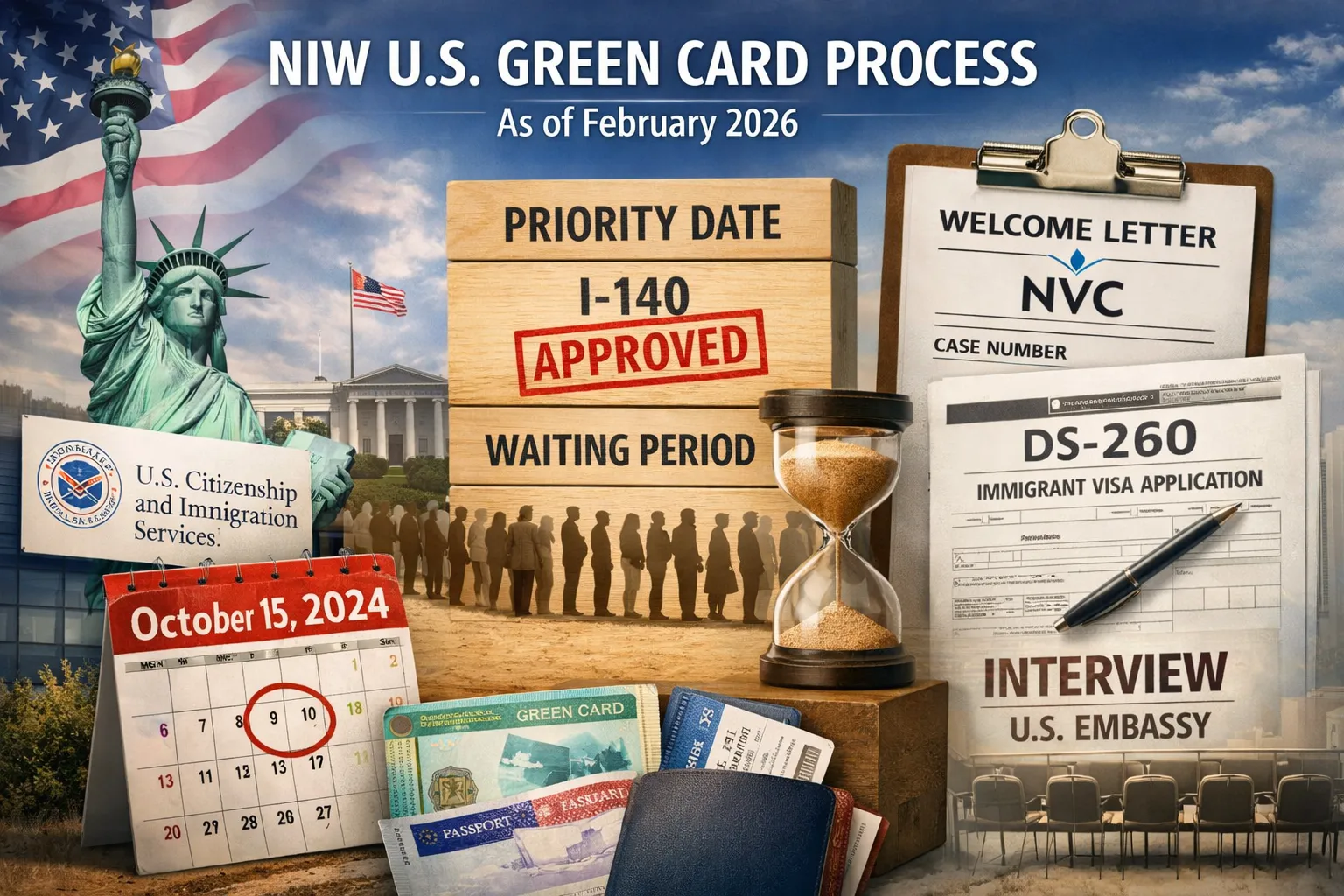
USCIS 통계에 따르면, 일반 수속 기준 NIW I-140 청원의 약 80%가 처리되는 데 약 22개월이 소요되고 있습니다. 프리미엄 프로세싱(급행 수속)을 이용할 경우, 이 단계의 심사 기간을 수년에서 수주 단위로 대폭 단축할 수 있습니다.
다만, 프리미엄 프로세싱은 I-140의 승인 여부만 빠르게 확정할 뿐, 최종 영주권 취득 시점을 앞당겨 주지는 않습니다. I-140 승인 이후에는 모든 NIW 신청자에게 동일한 비자 쿼터 규정과 후속 대기 절차가 적용되기 때문입니다.
■ 우선일자(Priority Date): 실질적인 대기의 기점
NIW에서 우선일자(Priority Date)는 I-140 청원이 USCIS에 접수된 날짜를 의미하며, 이는 향후 이민비자 절차를 진행할 수 있는 시점을 결정하는 절대적인 기준이 됩니다.
2026년 2월 비자문호 기준, EB-2 접수 가능일자(Dates for Filing)의 cutoff date는 2024년 10월 15일입니다. 이는 현재 시점(2026년 2월)과 비교할 때 약 16개월의 격차가 존재함을 뜻합니다. 이 격차는 I-140 승인 속도와 무관하게, 신청자가 영주권 최종 단계로 진입하기 위해 반드시 거쳐야 하는 대기 적체(Backlog) 구간입니다. 따라서 실무적으로 프리미엄 프로세싱은 청원 승인 여부를 조기에 확인하는 용도일 뿐, 비자 문호에 따른 대기 적체 자체를 해소하지는 못한다는 점에 유의해야 합니다.
■ I-140 승인 이후 NVC 웰컴 레터 발송까지
NIW 청원이 승인되어 영사 절차(Consular Processing)로 진행될 경우, 해당 케이스는 미국 국립비자센터(NVC)로 이관됩니다. 이관 후 NVC로부터 웰컴 레터(Welcome Letter)를 받기까지는 통상 수주 정도의 기간이 소요됩니다. 웰컴 레터에는 케이스 번호와 NVC 절차 개시를 위한 안내 사항이 포함되어 있습니다. 본인의 우선일자가 이미 도래했더라도, 이 레터를 수령하기 전까지는 다음 단계로 진행할 수 없다는 점을 인지해야 합니다.
■ NVC 수수료 납부, ACH 승인 및 DS-260 제출
웰컴 레터 수령 후에는 NVC 온라인 시스템을 통해 이민비자 수수료를 납부해야 합니다. 해당 수수료는 ACH(미국 은행 계좌이체) 방식으로만 결제 가능합니다. 일반적으로 ACH 결제가 최종 승인되어 DS-260(이민비자 신청서) 양식이 활성화되기까지 약 1주일이 소요됩니다. 이 승인 절차를 거쳐야만 비로소 DS-260 작성이 가능해집니다. 비록 짧은 기간이지만, 전체 일정을 수립할 때 흔히 간과하기 쉬운 실무적 단계이므로 주의가 필요합니다.
■ 서류완비(Documentarily Qualified, DQ) 이후의 장기 대기
DS-260 제출과 함께 모든 구비 서류 업로드를 완료하면 NVC의 서류 검토가 시작됩니다. 모든 서류가 요건을 충족하여 승인되면 해당 케이스는 DQ 상태가 됩니다.
여기서 유의할 점은 DQ 상태가 되었다고 해서 인터뷰가 즉시 배정되는 것은 아니라는 사실입니다. 이는 단지 인터뷰 대기 명단에 이름을 올릴 자격을 갖추었음을 의미할 뿐입니다. 현재 주한 미국 대사관(서울 광화문)에서 영사 절차를 진행하는 EB-2 NIW 신청자의 경우, 실무적으로 DQ 이후 실제 인터뷰 배정까지 약 25개월 내외의 상당한 대기 기간이 발생하고 있습니다. 이러한 지연은 비자 문호상의 적체와는 별개의 문제로, 주로 대사관의 인터뷰 수용 능력 및 행정 업무량에 의해 결정됩니다.
■ 프리미엄 프로세싱이 최종 일정에 미치는 영향
다시 한번 강조하지만, 프리미엄 프로세싱은 비자 문호 대기 기간, NVC 서류 검토 기간, 대사관 인터뷰 배정 기간을 단축시키지 못합니다. 오직 USCIS의 I-140 심사 속도에만 영향을 미칠 뿐입니다. 승인 이후에는 일반 수속 케이스와 동일한 절차를 밟게 되며, 동일한 대기열 내에서 순차적으로 진행됩니다.
■ 제3국 영사 절차 진행 고려 가능성
한국 외의 국가에서 합법적인 장기체류 자격을 보유하고 실제 거주 중인 신청자라면, 서울이 아닌 해당 국가 소재의 미국 대사관에서 영사 절차를 진행하는 방안을 고려해 볼 수 있습니다.
국가별로 인터뷰 적체 상황이 다르므로, 일부 국가의 경우 서울보다 대기 기간이 훨씬 짧을 수 있습니다. 다만, 이 대안은 신청자가 해당 국가의 합법적인 거주자여야 하며, 해당 대사관이 관할권 수용 여부를 승인하는 경우에만 가능합니다. 단순 관광객이나 단기 체류자는 대상에서 제외됩니다. 요건이 충족된다면, 이는 DQ 이후의 대기 기간을 실질적으로 단축할 수 있는 전략적 선택지가 될 수 있습니다.
■ 2026년 기준 NIW 전체 흐름의 이해
현재 NIW 절차는 단발적인 승인으로 끝나는 과정이 아니라, 여러 단계의 독립적인 대기 구간이 순차적으로 이어지는 구조입니다. 따라서 I-140 승인이 앞당겨졌다고 해서 전체 영주권 취득 시점이 반드시 단축되는 것은 아닙니다. 이러한 전체적인 흐름을 정확히 파악하고 현실적인 타임라인을 전제로 계획을 수립하는 것이, 불필요한 혼선과 기대치 차이를 줄이는 가장 현명한 방법입니다.
---------------------------------------------------
U.S. Green Card NIW Processing Times in February 2026
According to USCIS case processing time data, approximately 80% of NIW I-140 petitions under regular processing are completed in about 22 months. Premium processing can reduce this stage to weeks rather than years.
While premium processing may provide earlier certainty about petition approval, it does not accelerate the overall green card timeline. Once the I-140 is approved, the case is still subject to the same visa availability rules and post-approval queues as any other NIW petition.
Priority Date: When the Clock Really Starts
For NIW cases, the priority date is the date the I-140 petition is properly filed with USCIS. This date determines when an applicant may move forward toward immigrant visa processing.
As of February 2026, the EB-2 Dates for Filing (Chart B) cutoff is October 15, 2024. This creates a gap of roughly 16 months between the current filing cutoff and today in February 2026.
This gap represents the backlog applicants must wait through before they can even begin the final stages of the green card process, regardless of how quickly their I-140 is approved.
In practical terms, premium processing does not eliminate this gap. It only confirms approval sooner while the applicant continues waiting for visa availability.
From I-140 Approval to the NVC Welcome Letter
Once an NIW petition is approved and routed for consular processing, the case is transferred to the National Visa Center (NVC). There is typically a waiting period of several weeks before the NVC issues the Welcome Letter.
The Welcome Letter contains the case number and instructions needed to begin NVC processing. No further steps can be taken until this letter is issued, even if the priority date is already current.
NVC Fees, ACH Clearance, and the DS-260
After receiving the Welcome Letter, applicants must pay the required NVC fees through the online system. These payments are made via ACH transfer.
In most cases, it takes about one week for the ACH payment to clear and for the system to unlock the DS-260 immigrant visa application. Only after this clearance can the DS-260 be completed and submitted.
This short delay is routine but often overlooked when people estimate timelines.
Documentarily Qualified Status and the Long Wait Afterward
After the DS-260 is submitted and all civil documents are uploaded, NVC reviews the case. Once everything is accepted, the case becomes documentarily qualified (DQ).
Becoming DQ does not mean the interview will be scheduled soon. It simply means the case is eligible to wait in line for an interview slot.
For EB-2 NIW applicants processing through Seoul, current experience shows that there is approximately a 25-month wait between becoming documentarily qualified and being scheduled for an immigrant visa interview.
This wait is entirely separate from the Visa Bulletin backlog and is driven by embassy capacity and workload.
Premium Processing Does Not Change the Final Timeline
It is important to emphasize that premium processing does not shorten:
the Visa Bulletin wait,
the NVC document review queue,
or the embassy interview backlog.
Premium processing only affects how quickly USCIS decides the I-140 petition itself. Once approved, premium and regular processing cases enter the same downstream queues.
Considering Consular Processing Outside South Korea
For applicants who legally reside in another country and hold a valid residence visa there, it may be possible to complete consular processing at a different U.S. embassy rather than in South Korea.
This can be an important strategic consideration. Interview backlogs vary significantly by country, and some embassies have substantially shorter wait times than Seoul.
This option is only available if the applicant is a lawful resident of that country and the U.S. embassy there agrees to accept jurisdiction over the case. It is not available to tourists or short-term visitors. When feasible, however, it can materially reduce the post-DQ waiting period.
Putting the NIW Timeline in Perspective
As of February 2026, the NIW process should be understood as a series of independent waiting periods:
Document preparation period for the evidence heavy I-140 NIW petition
A Visa Bulletin backlog of roughly 16 months based on February 2026 cutoff dates
Post-approval administrative steps at NVC
A lengthy wait after documentarily qualified status, particularly in Seoul which is 25 months as of now.
Because of this structure, faster I-140 approval does not necessarily translate into faster green card issuance.
Applicants who understand this full timeline are better equipped to plan realistically and avoid frustration caused by expectations that focus on only one part of the process.

